Cryptocurrency prices rise and fall so quickly because several fast-acting forces can line up within minutes: markets that never close, automated trading bots, leveraged positions that liquidate on their own, and news that reaches every time zone in seconds. Each of these is manageable alone, but together they can turn a small push into a sharp move. Seeing how a fast price swing actually unfolds makes it easier to stay level-headed when a chart suddenly shoots up or drops. This is general information rather than investment advice, and the scenarios below are simplified illustrations, not forecasts.
The Anatomy of a Fast Move
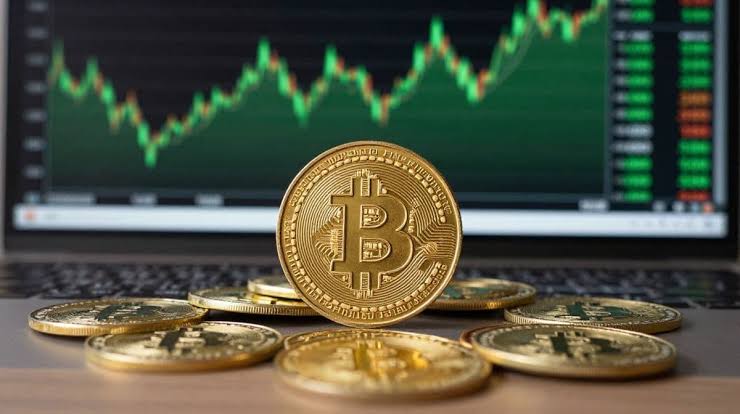
Imagine a coin trading quietly when unexpected news arrives, such as a regulatory headline or a large transfer to an exchange. Here’s how a sharp drop can build, step by step:
- The trigger. A headline or a big order arrives, and the price slips a few percent.
- The algorithmic reaction. Trading bots detect the move and join in, selling within milliseconds.
- The order book thins. Market makers, the firms that quote buy and sell prices, widen their spreads or pull orders when prices turn choppy, so fewer buyers stand in the way.
- The stops trigger. Stop-loss orders placed just below recent lows fire automatically, adding to the selling.
- The liquidations begin. Leveraged traders whose collateral falls below the required level are closed out by the exchange, creating forced selling.
- Momentum traders pile in. Short-term traders see the falling price and sell or short, pushing it further.
- Social media amplifies. Alarming posts spread quickly, prompting more people to act.
- The bounce. Eventually sellers run out, bargain hunters step in, and the price rebounds, sometimes as quickly as it fell.
All of this can happen in under an hour. Upward moves can follow the same pattern in reverse, with buying, short squeezes, and fear of missing out driving prices higher.
Force 1: A Market That Never Sleeps
Stock exchanges close each evening and over weekends, and that pause gives people time to absorb news. Crypto trades 24 hours a day, every day of the year.
- News lands instantly. There’s no waiting for the opening bell.
- Participants are global. Traders in every time zone react to the same event together.
- Thin hours magnify moves. Overnight or weekend trading volumes can be lower, so the same order moves prices further.
Force 2: Automated Trading
A large share of trading is done by software.
- Bots react in milliseconds, far faster than a human can click.
- Strategies often follow momentum, so a move in one direction can attract more bots in the same direction.
- Market makers adjust quotes as volatility rises, widening spreads or stepping back, which reduces available liquidity just when it’s needed.
The result is a market that can speed up quickly once a move starts.
Force 3: Leverage, Liquidations, and Squeezes
Many crypto platforms let traders borrow to increase their position size, and that changes how prices behave.
A simple example. Suppose a trader puts in ₹1,00,000 with 10x leverage, controlling ₹10,00,000 worth of a coin.
- If the price rises 5%, the position gains ₹50,000, a 50% return on the trader’s money.
- If the price falls 10%, the position loses ₹1,00,000, wiping out the trader’s entire deposit, so the exchange automatically closes it.
When many leveraged traders hold similar positions, a modest price move can trigger a wave of automatic closings.
- Long liquidations force selling when prices fall, which can push prices lower and trigger more liquidations.
- Short squeezes force buying when prices rise against traders who bet on a fall, which can push prices higher and trigger more buying.
- Funding rates and open interest are metrics traders watch to gauge how crowded one side of the market is.
This feedback loop is a key reason moves can accelerate in either direction.
Force 4: How Order Books Absorb (or Don’t Absorb) Orders
An order book is the list of buy and sell orders waiting at different prices.
- A market order takes whatever’s available at the best prices, and a large order can “walk the book,” filling at progressively worse prices.
- Thin books mean fewer orders at each price level, so the same trade moves the price more.
- Smaller coins typically have thinner books than Bitcoin or Ether, so their swings are often sharper.
- Slippage is the gap between the price you expected and the price you got, and it widens in fast markets.
Force 5: News, Narratives, and Expectations
Because most crypto assets don’t pay earnings or interest, prices respond strongly to expectations about the future.
- Regulatory news, such as new rules, product approvals, or enforcement announcements
- Institutional flows, such as investment fund inflows and outflows
- Macroeconomic events, such as interest-rate decisions and inflation data, which affect appetite for risk
- Technology milestones, such as network upgrades and new launches
- Security events and major transfers that shift sentiment
Markets often move on anticipation, then adjust again when the actual event arrives, sometimes in the opposite direction.
Force 6: Crowd Psychology and Social Media
Crypto attracts many individual investors, and emotion can travel at the speed of a post.
- Fear of missing out pulls people in after prices have already climbed.
- Panic selling accelerates declines when prices drop.
- Influencers and online communities can spread narratives quickly, whether accurate or not.
- Herd behaviour makes moves self-reinforcing, since people copy what others appear to be doing.
Force 7: Large Holders and Token Supply Events
- Large holders (often called whales) can move prices with a single trade, especially in smaller markets.
- Token unlocks release previously locked supply, which can add selling pressure.
- Scheduled events, such as halvings, may be priced in ahead of time.
Do Prices Fall Faster Than They Rise?
Sometimes they appear to, and the reason is that forced selling is mechanical: liquidations and stop orders don’t wait for conditions to improve. Rallies can be just as fast, particularly when short squeezes or heavy buying kick in. The details vary from episode to episode, so it helps to treat both directions as capable of sudden moves.
Signs a Market May Be Overheated or Panicking
No indicator predicts the future, but traders watch a few signals to gauge conditions:
- Sharp spikes in trading volume
- Rising open interest alongside rapid price moves, suggesting heavy leverage
- Extreme funding rates, which show how crowded one side has become
- Sentiment gauges, such as fear and greed indexes
- Widening spreads and thin order books
Practical Ways to Handle Fast Markets
- Avoid chasing candles. Decide your plan before the market moves, not during it.
- Use limit orders in turbulent conditions to control the price you pay, instead of market orders that can slip.
- Skip leverage unless you fully understand liquidation risk.
- Invest regularly in fixed amounts, such as a monthly SIP, to spread out your entry points.
- Size positions modestly, so a sharp drop doesn’t force a decision.
- Set price alerts instead of watching the screen constantly.
- Keep an emergency fund separate from your crypto holdings.
- Mind fees and slippage, which matter more in fast markets.
- Keep records for tax. In India, crypto gains are taxed and TDS applies on transactions, so save your statements.
- Take a long-term view, and review your plan on a schedule rather than after every headline.
Frequently Asked Questions
Q1. Why can a coin move 10% in an hour?
A: A combination of thin order books, automated trading, leveraged liquidations, and fast-spreading news can compress a large move into a short time.
Q2. Do bots cause crypto prices to swing?
A: They can speed up moves by reacting in milliseconds, and many follow momentum, though human traders and news are also major drivers.
Q3. What is a liquidation cascade?
A: It’s a chain reaction where falling prices force leveraged positions to close, and the resulting selling pushes prices lower and triggers more closings.
Q4. Are smaller coins more volatile than Bitcoin?
A: Generally yes, because they have shallower markets and fewer buyers and sellers, so the same trade moves the price more.
Q5. How can I avoid getting caught by sudden price moves?
A: Avoid leverage, use limit orders, invest gradually, and keep position sizes modest so a sharp swing doesn’t force you to sell.