Imagine watching the sun disappear behind golden sand dunes near Jaisalmer, taking an evening camel ride as the temperature becomes pleasantly cool, and later sitting around a desert camp under a clear night sky. Rajasthan’s desert experience can be unforgettable—but the time of year you choose makes an enormous difference.
The Thar Desert experiences significant temperature variations. Summer afternoons can become extremely hot, while winter nights can feel surprisingly cold. The monsoon brings some relief from peak summer heat but also changes the classic dry-desert experience. For most travellers, therefore, choosing the right season is essential for comfortably enjoying dunes, forts, outdoor sightseeing, desert camps and cultural programmes.
For most visitors, October to March is generally the best period to explore Rajasthan’s desert regions, with November to February offering particularly pleasant daytime conditions. However, the ideal month depends on whether your priority is comfortable weather, fewer tourists, lower costs, photography or desert camping.
Best Time to Visit Rajasthan’s Desert Region: Quick Overview
| Period | General Conditions | Suitable For |
|---|---|---|
| October | Transition to cooler weather | Early-season trips |
| November | Pleasant days, cooler evenings | Sightseeing and camping |
| December | Comfortable days, cold nights | Peak desert tourism |
| January | Coolest period | Outdoor activities |
| February | Pleasant and gradually warmer | Sightseeing, photography |
| March | Warmer days | Late-season trips |
| April–June | Very hot | Generally less comfortable |
| July–September | Monsoon influence, humidity/rain varies | Off-season travel |
October to March: The Best Overall Season
For most tourists, the period from October through March provides the best balance for exploring western Rajasthan.
Daytime conditions are generally much more comfortable than during summer, making it easier to spend several hours outdoors.
This matters because Rajasthan’s desert experience involves much more than sitting inside an air-conditioned hotel.
Travellers may want to enjoy:
- Fort exploration
- Heritage walks
- Sand dunes
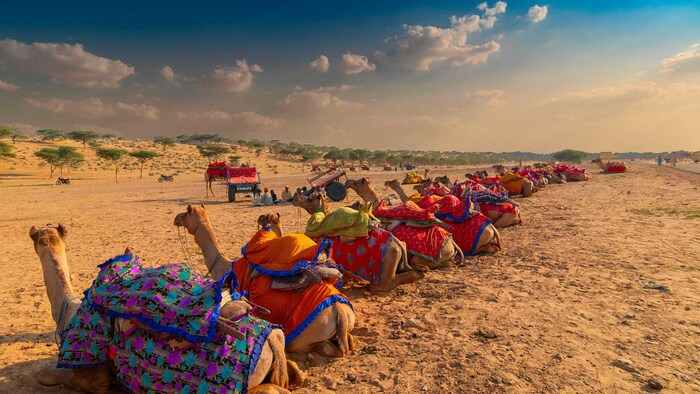
- Camel rides
- Jeep experiences
- Local markets
- Village visits
- Outdoor cultural performances
- Desert photography
- Camping
When temperatures are moderate, these activities become considerably easier.
October and March form the warmer edges of the season, while December and January bring the coolest conditions.
Why November to February Is Particularly Popular
If comfortable daytime sightseeing is the priority, November to February is often the most attractive window.
The intense heat of summer has disappeared, and days are generally suitable for outdoor exploration.
This is especially useful in places such as Jaisalmer, where visitors often combine city sightseeing with an evening trip to the dunes.
A typical day might include:
- Exploring Jaisalmer Fort
- Visiting historic havelis
- Having lunch in the city
- Travelling towards the dunes in the afternoon
- Watching the sunset
- Attending an evening cultural programme
- Staying overnight at a desert camp
Trying to follow a similar itinerary during peak summer would be considerably more demanding.
December and January: Excellent Weather but Cold Nights
Many travellers assume that because Rajasthan is famous for its desert, it must remain warm throughout the year.
That is a mistake.
Desert environments can experience substantial differences between daytime and nighttime temperatures. During December and January, evenings and early mornings in western Rajasthan can become quite cold.
The wind can make an outdoor desert camp feel even colder.
If travelling during peak winter, pack:
- A warm jacket
- Full-sleeve layers
- Trousers
- Closed footwear
- Warm nightwear
- Socks
- A scarf or shawl
Do not rely only on photographs showing sunny dunes.
You may be comfortable in lighter clothing during part of the afternoon and need a jacket shortly after sunset.
Layering is usually the most practical strategy.
October: Good for Avoiding the Deep Winter Rush
October is an attractive month for travellers who want to visit near the beginning of the main desert season.
Temperatures generally begin becoming more manageable after the hotter months, although afternoons can still feel warm.
The advantage is that visitors may experience pleasant evenings without the coldest winter nights.
October can work particularly well for:
- Fort sightseeing
- Photography
- Short desert excursions
- Travellers uncomfortable with very cold nights
- Families visiting during festive holidays
However, conditions vary from year to year, so travellers should check the forecast shortly before departure.
February: One of the Best Balanced Choices
February deserves special attention.
The coldest part of winter is beginning to ease, yet the intense summer heat has usually not arrived.
For many visitors, this creates an excellent balance between comfortable daytime temperatures and manageable evenings.
February is suitable for travellers who want to spend significant time outdoors.
It is also an important period for cultural tourism in Jaisalmer, where seasonal events can add another dimension to the desert experience.
Because popular events can increase demand for hotels, transport and camps, advance planning may still be necessary.
March: Possible, but Prepare for Increasing Heat
March marks the transition toward Rajasthan’s hotter season.
Early March can still be comfortable, particularly in mornings and evenings. As the month progresses, afternoons tend to become warmer.
March can be a practical option if your schedule does not allow a winter trip.
Plan outdoor sightseeing strategically:
- Start early in the morning.
- Rest during the hottest part of the afternoon.
- Carry sufficient drinking water.
- Use sunscreen.
- Wear breathable clothing.
- Keep a hat or other sun protection.
- Schedule dunes closer to sunset.
The advantage is that nights are generally less cold than during December or January.
Why April to June Is Usually Not Ideal
The most challenging period for casual desert tourism is generally April through June.
Western Rajasthan can experience extremely high daytime temperatures during late spring and early summer.
Direct sunlight, hot winds and exposed desert terrain can make prolonged outdoor activities uncomfortable and potentially unsafe.
Activities such as long camel rides, walking through forts at midday or spending extended periods on open dunes become far less enjoyable.
Travellers visiting during hot weather should be especially cautious about:
- Dehydration
- Sunburn
- Heat exhaustion
- Heatstroke
Sightseeing should be concentrated in early mornings and evenings, with substantial rest and hydration during the hottest hours.
For most leisure travellers who can choose another season, winter is a far more comfortable option.
What Happens During the Monsoon?
Rajasthan receives far less rainfall than many other parts of India, particularly in its western desert areas. However, the monsoon still influences conditions.
The July-to-September period can bring variable rainfall, clouds and increased humidity.
The landscape may also look different after rainfall, with patches of vegetation appearing in areas normally associated with dry scenery.
There are advantages to travelling during this period:
- Fewer peak-season tourists
- A different desert landscape
- Potentially lower accommodation demand
- Interesting cloudy skies for photography
However, the experience can be unpredictable.
Rain can affect roads and outdoor activities, while some seasonal desert tourism operations may not offer the same experience available during the main winter period.
If the classic desert-camp atmosphere is your priority, October to March remains the stronger choice.
Jaisalmer: The Heart of Rajasthan’s Desert Tourism
For most travellers, Rajasthan desert tourism means Jaisalmer.
The Golden City provides a convenient combination of architectural heritage and access to the Thar Desert.
Popular experiences include:
- Jaisalmer Fort
- Historic havelis
- Gadisar Lake
- Desert villages
- Sam Sand Dunes
- Khuri
- Camel experiences
- Desert camps
- Cultural performances
Sam is generally associated with a more developed and active tourism environment, while travellers sometimes choose areas such as Khuri when looking for a comparatively quieter desert experience.
The character of individual camps and locations varies considerably, so travellers should research carefully rather than assuming every “desert camp” provides the same experience.
Sunrise or Sunset: Which Is Better?
Sunset is the most popular time to visit the dunes.
The low-angle sunlight creates warm colours across the sand, while temperatures become more comfortable as evening approaches.
However, sunrise has its own advantages.
Early mornings can provide:
- Softer light
- Cooler conditions
- Fewer people in some locations
- A calmer atmosphere
Photographers may enjoy both.
If you are staying overnight near the dunes, consider watching the sunset in the evening and getting up early enough for sunrise the following morning.
Best Season for Desert Camping
The main desert-camping season generally aligns with Rajasthan’s cooler tourism months.
November to February is particularly attractive for camping because daytime activities are comfortable and evenings provide the classic cold-desert atmosphere.
Before booking, check what your package actually includes.
Useful questions include:
- Is the accommodation a tent or permanent structure?
- Is an attached bathroom available?
- Are blankets or heating arrangements provided?
- Are meals included?
- Is transport from Jaisalmer included?
- What activities are part of the package?
- Is the camp close to a busy tourist zone or a quieter area?
Do not select a camp solely from staged photographs.
Recent traveller feedback can provide a better idea of cleanliness, noise levels and actual facilities.
What to Pack for a Rajasthan Desert Trip
Packing should depend on the month, but several items are useful throughout the main tourism season.
Consider carrying:
- Comfortable walking shoes
- Sunglasses
- Sunscreen
- Hat or cap
- Reusable water bottle
- Moisturiser
- Lip balm
- Light daytime clothing
- Warm layers for winter evenings
- Power bank
- Personal medicines
The desert environment can feel dry, and dust can be noticeable during windy conditions.
If carrying cameras or other electronics, keep them protected from fine sand.
Choosing the Best Month Based on Your Travel Style
There is no single perfect month for everyone.
Choose according to your priorities.
For the most comfortable weather:
Consider November to February.
For cold desert nights:
December and January are strong choices.
For a balance of pleasant weather and less intense winter cold:
February can be excellent.
For travellers who dislike cold evenings:
October or early March may be more comfortable.
For budget-conscious off-season travellers:
Warmer or monsoon months may sometimes offer advantages, but weather comfort and availability of desert activities should be considered.
For first-time visitors, a trip between November and February remains the easiest recommendation because it allows Rajasthan’s forts, markets, dunes and outdoor experiences to be enjoyed without battling peak summer heat.
FAQs
1. Which is the single best month to visit Jaisalmer and the Thar Desert?
February is an excellent all-round choice because days are generally comfortable and nights are often less intensely cold than in December or January. However, travellers wanting the coolest conditions may prefer December or January.
2. Is it too cold to stay in a desert camp during December?
It can become quite cold after sunset and during early mornings. Camping is still popular, but travellers should bring warm layers and confirm what bedding and cold-weather arrangements their camp provides.
3. Can I visit Jaisalmer during May or June?
Yes, travel is possible, but these months can be extremely hot and are generally not ideal for extensive outdoor tourism. If travelling then, avoid strenuous activities during peak afternoon heat and take heat-safety precautions seriously.
4. How many days are enough for a Jaisalmer desert trip?
Around two to three days works well for many visitors. This can provide time for Jaisalmer’s major heritage attractions plus a sunset desert excursion or overnight camp. Travellers wanting slower sightseeing or village experiences may prefer additional time.