Choosing a good mutual fund is important, but deciding how much money to put into equity, debt, gold and other assets can be even more important for long-term investing. An investor may own several highly rated mutual funds, yet still face unnecessary risk if most of the portfolio is concentrated in one asset class. Strategic asset allocation helps solve this problem.
Strategic asset allocation means deciding a long-term investment mix according to your financial goals, investment horizon and ability to tolerate risk. For example, an investor may choose to maintain 70% in equity-oriented investments, 20% in debt and 10% in gold. Instead of changing this allocation whenever markets move, the investor periodically rebalances the portfolio towards the chosen mix.
For Indian mutual fund investors, this approach can create a better balance between growth and stability. However, no asset allocation can make mutual funds completely safe or guarantee maximum returns. Its real purpose is to seek suitable risk-adjusted returns while preventing one market segment from dominating the portfolio.
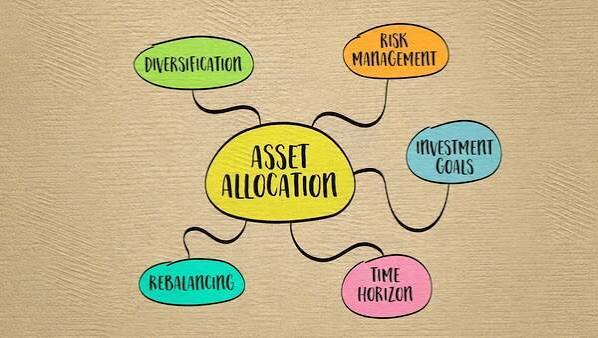
What Is Strategic Asset Allocation?
Strategic asset allocation is a long-term portfolio strategy in which an investor establishes a target percentage for different asset classes and maintains that allocation over time.
A hypothetical moderate portfolio might contain:
- 60% equity
- 30% debt
- 10% gold
A more aggressive long-term investor may choose greater equity exposure, while a conservative investor may prefer a larger debt allocation.
The appropriate combination depends on the individual rather than a universal formula.
Strategic asset allocation answers an important question before individual funds are selected:
How much risk should my overall portfolio take to achieve my financial goals?
Why Asset Allocation Matters in Mutual Fund Investing
Different asset classes behave differently under changing economic and market conditions.
Equity has strong long-term growth potential but can experience substantial short-term declines. Debt generally offers greater stability but also carries risks such as interest-rate and credit risk. Gold may behave differently from equities during certain periods and can provide diversification.
When these assets are combined thoughtfully, weakness in one part of the portfolio may sometimes be offset by greater stability or better performance elsewhere.
The main objectives of asset allocation include:
- Controlling overall portfolio risk
- Providing diversification
- Reducing excessive dependence on equity
- Matching investments with financial goals
- Creating a disciplined rebalancing framework
- Improving the investor’s ability to stay invested
This last point is especially important. A theoretically high-return portfolio is of little use if its volatility causes the investor to panic and exit during every major correction.
Strategic Asset Allocation Is Different for Every Investor
There is no perfect equity-debt ratio for all Indian investors.
Consider two people who are both 35 years old.
The first has a stable salary, adequate emergency savings, health and life insurance, no major debt and a retirement goal 25 years away.
The second has unstable income, significant loans and needs a large amount for a house purchase within three years.
Although they are the same age, their suitable asset allocations may be completely different.
Your allocation should consider:
- Investment horizon
- Financial goals
- Income stability
- Existing assets and liabilities
- Emergency savings
- Dependants
- Ability to tolerate temporary losses
- Need for liquidity
Age can be useful context, but it should not be the only factor.
How Equity Supports Long-Term Growth
Equity mutual funds invest primarily in shares of companies and therefore participate in the growth and profitability of businesses.
Over long investment periods, equity can play an important role in wealth creation and in attempting to stay ahead of inflation.
However, higher return potential comes with higher volatility.
An equity portfolio can experience significant declines during:
- Economic recessions
- Global crises
- Market bubbles
- Corporate earnings slowdowns
- Geopolitical shocks
- Sudden changes in investor sentiment
Strategic allocation prevents investors from assuming that high historical equity returns mean 100% equity is appropriate for every goal.
Money required within a short period should generally not depend heavily on stock-market performance.
How Debt Adds Stability to the Portfolio
Debt investments can act as the relatively stable portion of a diversified portfolio.
Depending on the category, debt mutual funds may invest in instruments such as:
- Government securities
- Treasury bills
- Corporate bonds
- Commercial paper
- Certificates of deposit
- Other money-market and debt instruments
Debt funds are not risk-free. They can face interest-rate, credit and liquidity risks.
However, an appropriately selected debt allocation can reduce the overall volatility of a portfolio dominated by equities.
Debt can also become increasingly important when a financial goal approaches and protecting accumulated wealth becomes a higher priority than aggressive growth.
Why Gold Can Add Diversification
Gold has traditionally been an important asset for Indian households, but investment portfolios should view it from a diversification perspective rather than simply cultural preference.
Gold does not always move in the same direction as equities.
During some periods of economic uncertainty, currency movements or market stress, gold may behave differently from stocks.
Investors seeking financial exposure to gold can consider suitable regulated investment options rather than necessarily relying on jewellery, which includes making charges and serves a different purpose.
Gold should normally be treated as one component of a diversified strategy rather than the entire investment plan.
How Strategic Allocation Can Improve Risk-Adjusted Returns
“Maximum return” and “best investment outcome” are not always the same thing.
Suppose Portfolio A produces higher long-term returns but repeatedly experiences extreme declines.
Portfolio B earns slightly lower returns but with considerably lower volatility.
For an investor who needs the money at a particular time or cannot tolerate large losses, Portfolio B may provide a more suitable outcome.
Strategic asset allocation attempts to balance:
Return potential + Risk + Time horizon + Goal requirements
It does not necessarily maximise the highest possible return. Instead, it seeks to generate an appropriate return for the amount of risk the investor can reasonably accept.
That is a more sustainable definition of successful investing.
Example of Strategic Asset Allocation
Consider an investor with ₹10 lakh and a long investment horizon.
Suppose the chosen target is:
- Equity: 60% = ₹6 lakh
- Debt: 30% = ₹3 lakh
- Gold: 10% = ₹1 lakh
After a strong equity rally, suppose the portfolio becomes:
- Equity: 70%
- Debt: 22%
- Gold: 8%
The portfolio is now more aggressive than originally intended.
Strategic rebalancing would involve gradually bringing it closer to the 60:30:10 target.
This could be achieved by:
- Directing fresh contributions towards debt and gold.
- Adjusting future SIP allocations.
- Redeeming part of an overweight asset where appropriate.
- Reinvesting into underweight assets.
Taxes and exit loads should be considered before making redemptions.
Strategic Asset Allocation vs Tactical Asset Allocation
These two strategies should not be confused.
Strategic Asset Allocation
The investor establishes a long-term target and periodically rebalances towards it.
For example:
Equity 60% + Debt 30% + Gold 10%
The strategy does not change simply because the market had a good or bad month.
Tactical Asset Allocation
The investor temporarily changes asset exposure based on expectations about market conditions.
For example, someone may reduce equity because they believe stocks are expensive and increase it again after expecting a correction.
Tactical allocation requires considerably more judgement and creates the risk of incorrect market timing.
For many long-term retail investors, a disciplined strategic approach may be easier to maintain.
Asset Allocation Should Change as Goals Get Closer
Strategic does not mean permanent.
Your target allocation can change as your financial circumstances and goals evolve.
Imagine you are investing for your child’s university education 15 years away. A meaningful equity allocation may initially be appropriate.
When the goal is only two years away, a major equity correction could seriously affect the available education corpus.
Therefore, the portfolio may gradually shift towards lower-volatility assets.
This process is sometimes called de-risking.
The same concept applies to retirement. An aggressive portfolio suitable decades before retirement may require modification as regular salary income approaches its end.
Rebalancing Keeps the Strategy on Track
Market movements continuously change portfolio percentages.
If equity rises much faster than debt, a 60% equity allocation may eventually become 75%.
Without rebalancing, the market effectively decides your risk level.
Investors can review allocations:
- Annually
- Half-yearly
- When allocations move beyond predetermined limits
- After a major financial-life change
Rebalancing does not require constant buying and selling.
For investors still making SIP contributions, new investments can often be directed towards underweight assets to gradually restore the target allocation.
Don’t Confuse Multiple Funds With Asset Allocation
Owning ten mutual funds does not necessarily create a well-diversified portfolio.
An investor could own:
- Two large-cap funds
- Two flexi-cap funds
- Three mid-cap funds
- Two small-cap funds
- One sectoral fund
Despite owning ten schemes, almost the entire portfolio may still be exposed to equity.
There may also be substantial overlap in underlying stocks.
Strategic diversification should be evaluated at the portfolio and asset-class level, not simply by counting the number of mutual fund schemes.
Common Asset Allocation Mistakes
Even experienced investors can allow market sentiment to influence their strategy.
Important mistakes to avoid include:
- Investing 100% in equity simply because markets are rising
- Keeping excessive cash while waiting for the perfect correction
- Choosing allocation only according to age
- Treating debt funds as completely risk-free
- Overloading the portfolio with small-cap or thematic funds
- Ignoring short-term financial requirements
- Changing allocation based on news headlines
- Failing to rebalance after large market movements
- Ignoring taxes and exit loads while restructuring
A strategic portfolio should be designed around financial objectives rather than predictions.
Why Discipline Matters More Than Finding the Perfect Allocation
There is no asset allocation that will outperform every year.
In some years, equity will dominate. In others, gold or debt may perform better.
Looking backwards and wishing you had invested everything in the previous year’s winning asset is easy. Predicting the next winner consistently is much harder.
Strategic asset allocation provides a framework that does not require such predictions.
It helps investors decide in advance how much risk they are prepared to take, diversify across appropriate assets and rebalance periodically. For long-term Indian mutual fund investors, this disciplined process can be more valuable than continuously switching funds in pursuit of the highest recent returns.
FAQs
Q1. What is the ideal equity and debt allocation for a mutual fund investor?
A. There is no universal ratio. The appropriate allocation depends on your investment horizon, financial goals, income stability, existing assets, liabilities and ability to tolerate losses. A portfolio suitable for a 20-year retirement goal may be inappropriate for money needed in two years.
Q2. Should I change my asset allocation when the stock market crashes?
A. A market crash alone should not automatically change a well-planned long-term allocation. If equity becomes significantly underweight, your predetermined rebalancing strategy may even require restoring some equity exposure. Changes should primarily reflect your goals and risk capacity rather than market fear.
Q3. Can I create asset allocation using only mutual funds?
A. Yes. Different mutual fund categories can provide exposure to equity, debt and gold. Hybrid and multi-asset funds can also combine multiple asset classes within a single scheme. The appropriate structure depends on how much control and simplicity you want.
Q4. How often should I review my mutual fund asset allocation?
A. For many long-term investors, reviewing the portfolio once or twice a year can be sufficient unless there is a major financial change. A review does not necessarily mean rebalancing; action is generally needed only when allocation has meaningfully drifted or your goals and risk profile have changed.