You finally have four or five days free and want a proper break. One person in the family imagines waking up to mist-covered mountains, cool air and a hot cup of tea. Someone else wants coconut trees, sea views, seafood and an evening walk along the beach. Both sound like perfect holidays, but they offer completely different experiences.
For Indian travellers, choosing between a hill station and a beach destination often depends on more than personal preference. The month of travel, weather conditions, journey time, budget, age of travellers, planned activities and tolerance for heat, cold or winding mountain roads can all influence which destination will provide the better holiday.
India makes the choice particularly interesting because both options are widely available—from Himachal Pradesh, Uttarakhand, Kashmir and the Western Ghats to Goa, Kerala, Karnataka, Odisha, Tamil Nadu and the Andaman Islands. Instead of asking which type of destination is universally better, choose the one that best matches the holiday you actually want.
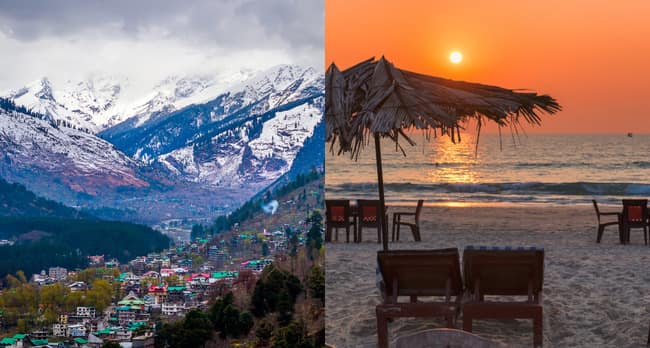
Hill Station vs Beach Destination: Quick Comparison
| Factor | Hill Station | Beach Destination |
|---|---|---|
| Typical Experience | Mountains, valleys and cool-weather escapes | Sea, sand and coastal atmosphere |
| Popular Activities | Trekking, viewpoints, nature walks | Swimming, beach walks, water activities |
| Summer Appeal | Often high | Depends heavily on coastal weather |
| Monsoon | Landslide/road risks in some regions | Rough seas/heavy rain possible |
| Winter | Cold to snowy depending on altitude | Pleasant at many Indian coastal destinations |
| Road Travel | Winding mountain roads common | Generally easier terrain |
| Relaxation | Quiet mountain stays | Resorts and beachside relaxation |
| Adventure | Treks and mountain activities | Water sports and coastal activities |
| Food Experience | Regional mountain cuisine | Seafood and coastal cuisine |
| Families | Excellent with suitable accessibility | Excellent with safe beach conditions |
| Photography | Peaks, valleys, forests | Sunsets, coastline, beaches |
| Packing | Layers and weather protection | Light clothing and sun protection |
Start With the Experience You Want
Before comparing hotel prices or making a list of attractions, ask a simple question:
How do I want to feel during this holiday?
If your idea of relaxation involves cool mornings, mountain views, forests and cafés overlooking valleys, a hill station may suit you.
If you imagine spending the day near the sea, walking barefoot on sand and enjoying a resort-style holiday, choose the coast.
A hill holiday generally works well for travellers interested in:
- Scenic drives
- Trekking
- Nature walks
- Mountain viewpoints
- Forests
- Cool-weather relaxation
A beach holiday may be better for:
- Swimming where conditions permit
- Water sports
- Beach walks
- Coastal food
- Resort stays
- Sunset experiences
The right choice starts with your preferred travel style.
Consider the Month of Travel
Season is one of the most important factors.
A destination that is wonderful in one month may be uncomfortable or difficult in another.
Hill Stations
Many Indian hill stations become especially popular during summer because travellers from the plains want relief from high temperatures.
Winter can provide a completely different experience, particularly at higher elevations where cold conditions or snowfall may occur.
Monsoon travel needs more careful consideration in some mountain regions because heavy rain can increase the risk of:
- Landslides
- Road closures
- Falling rocks
- Traffic disruption
- Reduced visibility
Conditions vary significantly between destinations.
Beaches
Many Indian coastal destinations are particularly attractive during cooler and drier months.
Peak summer can be hot and humid, while monsoon may bring heavy rain and rough sea conditions.
Never assume that a beach is safe for swimming simply because it is open to visitors. Follow local lifeguard instructions, warning signs and weather advisories.
Think About Your Tolerance for Heat and Cold
Personal comfort matters.
Some travellers love wearing jackets and waking up in cold mountain air. Others find low temperatures uncomfortable.
Similarly, one person may enjoy tropical coastal weather while another struggles with humidity.
For hill stations, consider:
- Daytime temperature
- Night temperature
- Wind
- Altitude
- Possibility of snow
- Heating arrangements at the hotel
For beach destinations, consider:
- Temperature
- Humidity
- Sun exposure
- Rainfall
- Sea conditions
Do not choose a destination only because photographs look attractive. Check whether its climate suits everyone travelling.
Journey Time Can Change the Decision
A four-day holiday should not necessarily involve two exhausting days of travel.
Many hill stations require a final journey by road from an airport, railway station or major city. Mountain roads can be slow because of curves, traffic and weather.
Beach destinations may have more direct airport or railway access, although remote coastal locations can also require long transfers.
Before booking, calculate door-to-hotel travel time, not simply flight or train duration.
For a short holiday, a destination six hours closer may provide more actual relaxation than a more famous place requiring complicated connections.
Travelling With Children Requires Practical Planning
Both hills and beaches can make excellent family holidays.
The difference is in the activities and logistics.
At a hill station, families should consider:
- Cold-weather clothing
- Long mountain drives
- Walking distances
- Hotel access
- Altitude
- Weather changes
At a beach, consider:
- Sun protection
- Hydration
- Water safety
- Lifeguard availability
- Heat and humidity
- Appropriate swimming areas
Children should always be supervised around water, even where the sea appears calm.
A resort with a pool and children’s activities may sometimes be more practical than choosing a destination solely because it has a famous beach.
Elderly Travellers May Need Different Priorities
When travelling with parents or grandparents, accessibility can become more important than sightseeing.
Some hill destinations involve steep roads, stairs and extensive walking.
Higher altitude may also require extra consideration for travellers with certain medical conditions.
Beach destinations can sometimes offer flatter terrain, but heat and humidity may create their own challenges.
Before choosing, check:
- Lift availability at the hotel
- Distance from vehicle drop-off to room
- Stairs
- Nearby healthcare
- Walking requirements
- Weather
- Journey duration
For travellers with significant heart, lung, mobility or other health concerns, individual medical advice may be appropriate before high-altitude travel.
Compare the Activities You Actually Enjoy
Do not build your holiday around activities you are unlikely to do.
A hill station might advertise trekking, but if your family prefers cafés and scenic drives, choose a destination that offers those experiences comfortably.
Popular mountain activities can include:
- Trekking
- Hiking
- Scenic drives
- Camping
- Nature photography
- Adventure activities where available
Beach destinations may offer:
- Swimming
- Snorkelling
- Scuba diving
- Kayaking
- Surfing
- Boat trips
- Parasailing and other water sports where available
Activity availability depends on weather, season, regulations and local operators.
Use properly equipped and reputable operators for adventure activities.
Which Option Is Better for a Quiet Holiday?
Either can work.
A remote mountain village can be peaceful, while a famous hill station during a summer weekend can be extremely crowded.
The same applies to beaches.
A popular beach during a holiday weekend may be packed, while another stretch of coastline nearby could be much quieter.
Instead of choosing “hill” or “beach” based on assumptions, investigate the specific location and dates.
For fewer crowds:
- Avoid major long weekends where possible.
- Consider weekdays.
- Explore shoulder-season dates.
- Stay slightly outside busy town centres.
- Consider less commercial destinations with adequate facilities.
Budget Depends More on Destination Than Landscape
Neither hills nor beaches are automatically cheaper.
You can find budget guesthouses and luxury resorts in both.
Your total holiday cost may include:
- Flights or trains
- Local taxis
- Hotel
- Food
- Activities
- Entry fees
- Equipment rental
At hill stations, local taxi costs and longer road transfers can add up.
At beach destinations, premium beachfront accommodation and water sports can significantly increase expenses.
Compare the complete trip cost, not only the hotel rate.
Food Can Be Part of the Decision
Food-focused travellers should consider regional cuisine.
Mountain destinations may offer local dishes influenced by climate, agriculture and regional traditions.
Coastal destinations can provide an entirely different experience, with fish, prawns, coconut-based preparations and other regional specialities depending on the location.
Vegetarian travellers can find options in both categories, particularly at established tourist destinations.
If food is an important part of your holiday, research the local cuisine before deciding rather than assuming every hill station or beach town offers the same menu.
When a Hill Station Is the Better Choice
Choose a hill station when:
- You want cooler weather.
- Mountain scenery is the main attraction.
- You enjoy walking, trekking or scenic drives.
- You want a cosy, nature-oriented holiday.
- Everyone is comfortable with the journey and altitude.
When a Beach Destination Is the Better Choice
Choose a beach destination when:
- You want a coastal atmosphere.
- Swimming or water activities are priorities.
- You prefer resort-style relaxation.
- Coastal food interests you.
- Weather and sea conditions are suitable.
Ultimately, choose the destination that fits your dates, people and purpose rather than following whichever place is currently trending on social media.
A peaceful hill stay can be disappointing if you dislike cold weather and winding roads. A famous beach can feel equally wrong if you hate humidity and have no interest in the sea.
The better holiday is the one designed around the people actually taking it.
FAQs
Q1. Which is better for a short three-day trip: hills or beaches?
A. Choose whichever requires less door-to-hotel travel. For a short break, convenient access often matters more than the type of destination because long transfers can consume a significant portion of the holiday.
Q2. Should I choose hills or beaches during the Indian monsoon?
A. It depends on the exact destination. Some mountain regions may experience landslide and road-closure risks, while coastal areas can face heavy rainfall and rough seas. Check current local weather and safety conditions before travelling.
Q3. Are beach holidays better for elderly travellers than hill stations?
A. Not automatically. Beach destinations may offer flatter terrain, but heat and humidity can be difficult for some travellers. Hill stations may involve altitude, steep walking and winding roads. Choose based on the individual’s mobility, health and comfort.
Q4. How can I choose when my family wants hills but I want a beach?
A. Consider a destination combining elevated landscapes with relatively easy access to the coast, or alternate the type of holiday each trip. Another option is to focus on shared priorities—weather, activities, hotel quality and travel time—and select whichever destination satisfies the most important ones.