A tap may look like a small detail when designing a kitchen or bathroom, but it is one of the most frequently used fixtures in a home. It is opened and closed several times every day, remains continuously exposed to water and moisture, and must cope with varying water pressure and cleaning products. In Indian homes, hard water, humid bathrooms and inconsistent product quality can make choosing the right tap material even more important.
Brass and stainless steel are two popular materials for taps and faucets, and both can provide excellent service when the product is well manufactured. Brass has traditionally been valued for its strength, ease of manufacturing and wide range of designs and finishes. Stainless steel offers excellent corrosion resistance, a clean modern appearance and relatively straightforward maintenance.
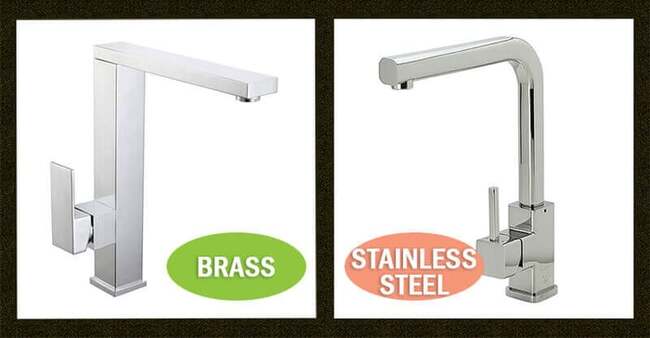
So, which is better? The answer depends on the grade of material, water conditions, finish, internal components, installation and budget—not simply whether the tap is labelled brass or stainless steel.
Brass vs Stainless Steel Taps: Quick Comparison
| Factor | Brass Taps | Stainless Steel Taps |
|---|---|---|
| Base Material | Copper-zinc alloy | Steel alloy containing chromium |
| Corrosion Resistance | Good with quality material and finish | Excellent with suitable grade |
| Strength | Excellent | Excellent |
| Weight | Usually relatively heavy | Can vary by construction |
| Finish Options | Very wide range | Often natural/brushed/polished finishes |
| Hard-Water Maintenance | Requires regular cleaning | Requires regular cleaning |
| Design Variety | Very high | High |
| Typical Style | Traditional to luxury modern | Modern and minimal |
| Maintenance | Moderate | Generally easy |
| Price | Varies widely | Varies according to grade and construction |
| Best Choice | Design variety and proven fixture construction | Corrosion resistance and modern appearance |
What Are Brass Taps?
Brass is primarily an alloy of copper and zinc. It has been used extensively for plumbing fittings, valves and taps because it is strong, workable and suitable for producing complex components.
Many premium taps that appear chrome, black, gold or another colour may have brass underneath the decorative surface.
Brass taps are popular for:
- Bathroom basins
- Kitchen sinks
- Showers
- Wall mixers
- Bib taps
- Bath fittings
- Premium decorative faucets
One advantage of brass is its versatility. Manufacturers can produce a wide range of tap shapes and then apply different finishes to achieve the desired appearance.
However, brass composition and product quality vary. A heavy-looking tap is not automatically a high-quality brass tap.
What Are Stainless Steel Taps?
Stainless steel is an iron-based alloy containing chromium, which helps create a protective surface layer that provides corrosion resistance.
Stainless steel taps have become increasingly popular in modern Indian kitchens and bathrooms because of their clean appearance and durability.
They are especially attractive for contemporary interiors featuring:
- Stainless steel kitchen sinks
- Minimalist bathrooms
- Modern countertops
- Neutral colour schemes
- Industrial-style interiors
The grade of stainless steel matters. Different grades offer different levels of corrosion resistance, so buyers should look beyond a simple “stainless steel” label.
Which Is More Durable?
Both quality brass and stainless steel taps can last for many years.
Brass is mechanically strong and has a long history of use in plumbing fixtures. A well-manufactured brass tap with quality internal components can withstand frequent daily operation.
Stainless steel is also strong and durable. A suitable stainless grade offers excellent resistance to moisture and everyday bathroom or kitchen conditions.
However, tap durability depends on much more than the body material.
Important factors include:
- Cartridge quality
- Valve construction
- Handle mechanism
- Seals and O-rings
- Finish quality
- Water pressure
- Installation
- Water chemistry
A premium body fitted with a poor-quality cartridge may start dripping much earlier than expected.
Therefore, compare the complete tap rather than only its external material.
Corrosion Resistance: Which Performs Better?
Stainless steel has an important advantage when corrosion resistance is the main priority, provided a suitable grade is used and the surface is maintained correctly.
Its chromium-containing surface helps protect the underlying material.
Quality brass also offers good corrosion resistance, which is one reason it has traditionally been used for plumbing.
However, brass taps often rely on an external decorative finish, and the appearance can deteriorate if that finish is damaged or exposed to unsuitable cleaning chemicals.
For humid bathrooms or coastal environments, corrosion resistance becomes especially important.
Homeowners should look for:
- Suitable material grade
- Quality surface finish
- Corrosion-resistant internal components
- Good manufacturer warranty
Avoid judging corrosion resistance solely by how shiny the tap appears in the showroom.
Brass vs Stainless Steel in Hard-Water Areas
Hard water is common in many parts of India and can leave mineral deposits on taps regardless of whether they are brass or stainless steel.
You may notice:
- White spots
- Chalky deposits
- Reduced aerator flow
- Marks around the tap base
- Scale near the outlet
These deposits come primarily from minerals in the water rather than rust from the tap itself.
Both brass and stainless steel taps therefore require regular cleaning in hard-water areas.
A practical routine is to:
- Wipe taps after heavy use.
- Clean the aerator periodically.
- Avoid allowing thick scale to build up.
- Follow the manufacturer’s recommended cleaning method.
- Avoid highly abrasive cleaners.
Hard-water performance also depends on cartridges, aerators and internal passages, not merely the external body.
Which Is Better for Bathrooms?
Both materials work well in bathrooms.
Brass has an advantage when homeowners want a wider variety of decorative finishes.
Brass-based taps are commonly available in:
- Chrome
- Matte black
- Brushed gold
- Antique brass
- Rose-gold-style finishes
- Other decorative finishes
This makes brass particularly attractive for bathrooms where taps are part of the overall design theme.
Stainless steel is an excellent choice for homeowners who prefer a simpler, contemporary appearance and strong corrosion resistance.
For bathrooms, also consider:
- Matching shower fittings
- Basin style
- Water pressure
- Ease of cleaning
- Availability of replacement cartridges
A tap should complement both the plumbing system and the interior design.
Which Is Better for Kitchen Sinks?
Stainless steel is particularly attractive in kitchens because it pairs naturally with stainless steel sinks and appliances.
A brushed stainless finish can also make minor water marks and fingerprints less visually distracting than some highly polished surfaces.
Brass taps remain an equally practical option when they use a quality finish and internal mechanism.
Kitchen taps receive heavy use, so pay special attention to:
- Spout movement
- Cartridge durability
- Aerator quality
- Handle operation
- Flexible hose quality
- Pull-out mechanism, if provided
For kitchens, ease of repair can be just as important as the body material.
Finish and Appearance
Brass provides exceptional flexibility in decorative design because it can serve as a base for numerous surface finishes.
This makes it popular in luxury and designer bathrooms.
Stainless steel has an attractive natural metallic appearance and is particularly well suited to minimalist interiors.
Popular stainless appearances include polished and brushed finishes.
When choosing a finish, think beyond showroom appearance.
Ask yourself:
- Will water spots be highly visible?
- Does it match the basin or sink?
- Are matching accessories available?
- Is the finish easy to clean?
- What happens if the coating becomes scratched?
A timeless finish can be easier to match when replacing accessories several years later.
Maintenance and Cleaning
Both materials are relatively easy to maintain when cleaned properly.
For routine cleaning:
- Use a soft cloth.
- Remove water droplets regularly.
- Clean mineral deposits before they become thick.
- Avoid steel wool and harsh abrasives.
- Avoid strong chemicals unless approved by the manufacturer.
- Keep the aerator clean.
Decorative coated brass taps require particular care because aggressive cleaners may damage the surface.
Stainless steel can also become scratched if abrasive pads are used.
A simple cleaning routine is generally more effective than occasional aggressive scrubbing.
Which Is More Hygienic?
For household use, hygiene depends heavily on cleaning and maintenance rather than simply choosing brass or stainless steel.
Frequently touched areas such as handles should be cleaned regularly.
Aerators can also collect scale and debris over time and should be maintained according to the manufacturer’s instructions.
For drinking-water taps, homeowners should prioritise:
- Reputable products
- Materials suitable for potable-water contact
- Quality internal components
- Proper installation
- Clean aerators
The cheapest unverified tap may not provide the same material quality or manufacturing consistency as a properly specified product.
Price: Brass or Stainless Steel?
There is no universal rule that every brass tap is more expensive or every stainless steel tap is cheaper.
Prices depend on:
- Material grade
- Tap size
- Body construction
- Finish
- Cartridge
- Brand
- Design complexity
- Warranty
- Special functions
A simple high-quality tap may offer better long-term value than a heavily styled product with low-quality internal parts.
Instead of buying solely on price, compare the complete specification and warranty.
How to Identify a Good-Quality Tap
Whether choosing brass or stainless steel, check more than the outer appearance.
Important buying points include:
- Clearly stated body material
- Material grade or composition information where provided
- Smooth handle movement
- Quality ceramic cartridge where applicable
- Reliable aerator
- Suitable pressure rating
- Good surface finishing
- Warranty
- Availability of spare cartridges and parts
- Established manufacturer or seller
For concealed or premium fixtures, spare-part availability becomes particularly important because replacing an entire fitting later can be inconvenient.
Common Mistakes to Avoid
When buying taps, avoid:
- Choosing only by weight
- Assuming every “stainless steel” tap uses the same grade
- Assuming every brass tap has the same composition
- Buying purely for colour
- Ignoring cartridge quality
- Using harsh cleaners on decorative finishes
- Ignoring local water conditions
- Choosing an unknown product with no spare parts
- Forgetting to check warranty
- Mixing finishes without considering the overall bathroom design
The best tap is one that combines a suitable body material with quality internal components and reliable after-sales support.
Brass or Stainless Steel: Which Should You Choose?
Choose a quality brass tap when:
- You want a broad range of designs and finishes.
- You prefer traditional or luxury styling.
- A proven brass-bodied fixture fits your plumbing requirements.
- Replacement components are readily available.
Choose a quality stainless steel tap when:
- Corrosion resistance is a major priority.
- You prefer a modern metallic appearance.
- You want a finish that complements a stainless steel kitchen sink.
- A suitable stainless grade and good internal components are specified.
For most Indian homes, either can be an excellent choice. Material quality, cartridge performance, finish, water conditions and manufacturer support matter more than the brass-versus-stainless label alone.
FAQs
Q1. Which tap is better for hard water: brass or stainless steel?
A. Both can work in hard-water areas. Stainless steel offers excellent corrosion resistance, while quality brass is also highly suitable for plumbing fixtures. However, mineral scale can accumulate on either material, so regular cleaning of the surface and aerator remains important.
Q2. How can I tell whether a tap is solid brass?
A. Do not rely only on weight, colour or appearance. Ask for the manufacturer’s material specification and product documentation. Many brass taps have chrome or other coatings, so the exterior may not reveal the body material.
Q3. Are stainless steel taps good for bathrooms?
A. Yes. Quality stainless steel taps are well suited to bathrooms because of their durability, corrosion resistance and contemporary appearance. Choose a suitable grade and ensure cartridges and other internal components are also good quality.
Q4. What matters most when buying a tap for long-term use?
A. Look at the complete fixture: body material, cartridge quality, surface finish, aerator, seals, warranty and availability of replacement parts. Good installation and regular cleaning are also important for long-term performance.