Glass choice can completely change how a room feels during the day. A large clear-glass window may fill a living room with natural light and provide an open view, but the same window can also allow uncomfortable sunlight and heat if it faces the harsh afternoon sun. Tinted glass can reduce glare and some solar heat, but choosing a tint that is too dark may make interiors gloomy and increase dependence on artificial lighting.
This makes the choice between tinted glass and clear glass windows especially relevant for Indian homes. From Delhi’s hot summers and Rajasthan’s intense sunshine to humid coastal cities and cloudy monsoon months, windows have to balance daylight, heat, privacy and comfort.
Neither option is universally better. Clear glass works beautifully where daylight and unobstructed views are priorities, while properly selected tinted glass can be useful for sun-exposed windows. The key is choosing according to the orientation and use of each room rather than installing the same glass everywhere.
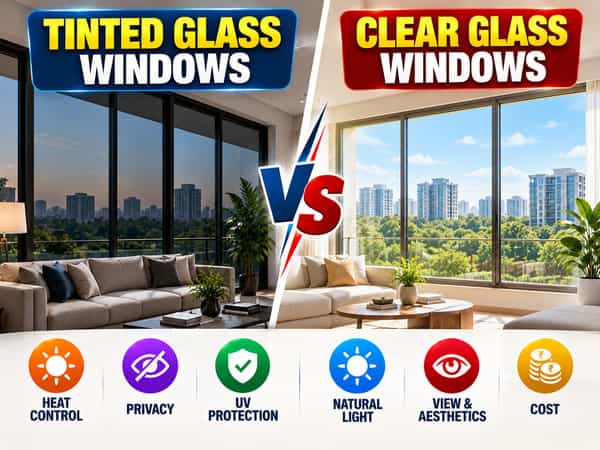
Tinted Glass vs Clear Glass: Quick Comparison
| Factor | Tinted Glass | Clear Glass |
|---|---|---|
| Natural Light | Reduced depending on tint | Maximum daylight |
| Outside View | Slightly altered by colour | Clear and natural |
| Glare Reduction | Better | Limited |
| Solar Heat Control | Can be better | Basic |
| Daytime Privacy | Can improve in some conditions | Limited |
| Night Privacy | Limited | Limited |
| Colour Appearance | Changes with tint | Neutral |
| Indoor Brightness | Lower | Higher |
| Best Use | Sun-exposed windows | Areas needing maximum daylight |
| Design Style | Contemporary, distinctive | Neutral and versatile |
What Is Clear Glass?
Clear glass is the conventional transparent glazing used in residential windows.
Its biggest advantage is high visible-light transmission. It allows natural daylight into the room while providing a relatively neutral view of the outdoors.
Clear glass is commonly used for:
- Living-room windows
- Bedrooms
- Balcony windows
- Kitchen windows
- Fixed glazing
- Doors
- Internal glass partitions
It can also be toughened, laminated or incorporated into double-glazed units depending on safety, acoustic and thermal requirements.
Therefore, “clear” describes its visual appearance rather than its entire performance specification.
What Is Tinted Glass?
Tinted glass contains colour that changes how much visible light and solar energy passes through the window.
Common appearances include:
- Grey
- Bronze
- Green
- Blue or blue-green shades
Tint intensity varies between products.
A light tint may subtly reduce brightness and glare while preserving good visibility. A darker tint can have a much stronger effect on the appearance and brightness of a room.
This is why homeowners should ideally inspect an actual glass sample under natural daylight rather than selecting a tint only from a brochure or small digital image.
Which Glass Is Better for Reducing Heat?
Tinted glass can reduce some solar heat compared with basic clear glass, depending on its composition and performance characteristics.
This can be helpful for windows receiving intense direct sunlight.
Consider a west-facing living room in an Indian city. During the afternoon, strong sunlight may enter through a large area of clear glass, increasing glare and indoor heat.
Appropriate solar-control glazing can improve comfort.
However, homeowners should understand an important point:
Dark-looking glass is not automatically the most energy-efficient glass.
Some glass products use specialised coatings to control solar heat while still allowing useful daylight.
Therefore, if heat reduction is the primary objective, compare technical performance rather than simply choosing the darkest tint available.
Why Window Direction Matters
The direction your windows face can influence whether tinting is useful.
West-Facing Windows
These can receive strong afternoon sunlight, often when outdoor temperatures are already high.
Solar-control or appropriately tinted glass may be useful.
East-Facing Windows
Morning sunlight is generally less problematic than intense late-afternoon exposure, although conditions vary by climate and building design.
North-Facing Windows
These may receive less direct solar exposure in many situations and can often benefit from clear glass that maximises daylight.
South-Facing Windows
Performance depends on building orientation, latitude, shading and seasonal sun angles.
Instead of using one glass specification for the whole house, evaluate each façade separately.
Which Provides More Natural Light?
Clear glass is the straightforward winner when maximum daylight is the priority.
It allows more visible light into the room than a comparable tinted product designed to reduce light transmission.
This can make interiors feel:
- Brighter
- More open
- More connected to outdoor spaces
- Less dependent on artificial lighting during daytime
Clear glass can be particularly useful in smaller rooms or areas that already receive limited sunlight.
Tinted glass reduces visible light to varying degrees.
A mild tint may have little noticeable impact, but a dark tint can make a room considerably darker.
In a room with limited window area, excessive tinting can therefore create the opposite problem: insufficient natural light.
Does Tinted Glass Provide Privacy?
Tinted glass can provide some daytime privacy, but it should not be treated as a complete privacy solution.
Its effectiveness depends heavily on relative lighting conditions.
During the day, when the outside is much brighter than the inside, darker glass may make it more difficult for someone outside to see into the room.
At night, the situation can reverse.
If interior lights are switched on and the exterior is dark, people outside may still be able to see inside.
Therefore, tinted glass should not replace:
- Curtains
- Blinds
- Privacy screens
- Frosted glass where appropriate
For bathrooms and other spaces requiring consistent visual privacy, dedicated privacy glazing is usually more suitable.
Which Is Better for Reducing Glare?
Tinted glass generally performs better when glare is a major concern.
Strong sunlight reflecting from floors, neighbouring buildings, vehicles or water can make a room uncomfortable.
Glare can also make it difficult to:
- Watch television
- Use a computer
- Work from home
- Read comfortably
- Use screens near windows
Appropriate tinting can reduce the intensity of visible sunlight.
However, darker is not always better. Excessive tint can reduce useful daylight even when glare is not present.
The objective should be comfortable daylight, not simply minimum brightness.
Tinted vs Clear Glass for Air-Conditioned Homes
For air-conditioned rooms, controlling unwanted solar heat can help reduce cooling demand.
Tinted or specialised solar-control glazing may therefore be beneficial in highly exposed windows.
But glass is only one part of the building envelope.
Cooling performance also depends on:
- Roof insulation
- Wall construction
- Window sealing
- Frame performance
- External shading
- Curtains or blinds
- Window size
- Building orientation
For high-performance homes, Low-E coatings and insulated glass units may provide more sophisticated thermal control than relying only on conventional tint.
Does Tinted Glass Protect Furniture From Fading?
Sunlight can contribute to fading and deterioration of:
- Curtains
- Wooden flooring
- Furniture
- Paintings
- Fabrics
- Decorative items
Certain tinted or coated glazing products can reduce portions of the solar radiation reaching interiors, which may help slow fading.
However, tinting should not be assumed to provide complete UV protection.
If protecting valuable interiors is a major requirement, ask specifically about the product’s UV transmission or rejection performance rather than relying on its colour.
Laminated and specialised coated glass may also be considered depending on the requirement.
What About the Outside View?
Clear glass provides the most neutral outdoor view.
This makes it particularly attractive for:
- Homes overlooking gardens
- High-rise apartments with city views
- Mountain properties
- Villas with landscaped surroundings
- Balcony glazing
Tinted glass changes the colour and brightness of the view to some extent.
A grey tint may create a neutral contemporary appearance, while bronze or green glass can noticeably alter exterior colours.
For premium views, homeowners may therefore prefer high-performance glass that controls heat while maintaining relatively high visual clarity.
Tinted vs Clear Glass for Different Rooms
You do not have to choose one type for your entire home.
Living Room
Clear glass works well when natural light and views are important. For large west-facing windows, solar-control or lightly tinted glazing may improve comfort.
Bedroom
Either can work. Tinted glass may reduce morning or afternoon glare depending on orientation, while curtains can provide nighttime privacy.
Kitchen
Clear glass is often useful because it keeps the workspace naturally bright.
Bathroom
Neither standard clear nor ordinary tinted glass is ideal where complete privacy is required. Frosted or other privacy glass may be more appropriate.
Home Office
Glare control becomes important when computer screens face or sit close to windows. A carefully selected tint or solar-control product can help.
Cost: Is Tinted Glass More Expensive?
Tinted glass can cost more than basic clear glass, but price depends on specification rather than colour alone.
Factors influencing window-glass cost include:
- Glass thickness
- Toughening
- Lamination
- Tint
- Special coatings
- Single or double glazing
- Glass dimensions
- Edge processing
- Installation
A high-performance clear Low-E DGU, for example, can cost substantially more than basic tinted single glass.
Therefore, compare products based on performance and complete specifications, not simply “clear versus tinted.”
Common Mistakes to Avoid
Before selecting window glass, avoid:
- Choosing very dark glass solely for appearance
- Assuming darker tint always means lower heat
- Expecting tint to provide nighttime privacy
- Ignoring window direction
- Using the same glass specification on every façade
- Ignoring glare in work and television areas
- Forgetting safety requirements
- Selecting glass without considering the frame
- Judging colour from online photographs alone
- Ignoring curtains, shading and other heat-control measures
A small glass sample viewed in actual daylight can help you understand how a tint will look before placing a large order.
Which Should You Choose?
Choose clear glass when:
- Maximum natural daylight is important.
- You want an unobstructed outdoor view.
- Windows receive limited harsh sunlight.
- The room is naturally dark.
- You prefer a neutral appearance.
Consider tinted glass when:
- Windows receive strong direct sunlight.
- Daytime glare is uncomfortable.
- Some reduction in solar heat is desired.
- You prefer a darker contemporary appearance.
- Daytime privacy is useful, while understanding its limitations.
For many Indian homes, the smartest solution is not choosing tinted or clear glass for the entire property. It is selecting the right glazing for each window according to orientation, sunlight, room use and privacy needs.
FAQs
1. Which is better for reducing summer heat: tinted or clear glass?
A. Appropriate tinted glass can reduce more solar heat than basic clear glass, but performance varies significantly between products. If heat control is the main objective, compare solar-performance specifications and consider solar-control or Low-E glazing instead of selecting glass only by how dark it looks.
2. Can people see through tinted home windows at night?
A. Yes, they often can. When the room is brightly lit and it is dark outside, the daytime privacy effect can be greatly reduced. Curtains, blinds or dedicated privacy glazing should be used where reliable nighttime privacy is required.
3. Should I use tinted glass on every window in my house?
A. Usually not. Different windows receive different amounts of sunlight. A west-facing window may benefit from solar control, while a shaded window could become unnecessarily dark with the same tint. Selecting glazing according to orientation and room requirements is generally more effective.
4. Can tinted glass be toughened or double glazed?
A. Yes. Depending on the product and manufacturer, tinted glass can be incorporated into toughened, laminated or double-glazed configurations. These features address different requirements such as safety, insulation and noise control, so the complete glass specification should be selected according to the application.