Windows play a major role in how an Indian home looks, feels and performs throughout the year. They face intense summer heat, monsoon rain, dust, humidity and, in some regions, salty coastal air. At the same time, homeowners expect windows to provide ventilation, security, insulation and an attractive appearance. This makes the choice between wooden windows and aluminium windows more important than simply deciding which material looks better.
Wooden windows bring natural warmth and a timeless character that works beautifully with traditional as well as premium interiors. Aluminium windows offer slim profiles, structural strength and comparatively low maintenance, making them especially popular in modern apartments and contemporary houses.
Both materials can provide excellent windows when manufactured and installed correctly. However, their maintenance needs, resistance to Indian weather, design possibilities and long-term costs can be very different. Understanding these differences will help you select the right option for your home rather than making a decision based only on the initial price.
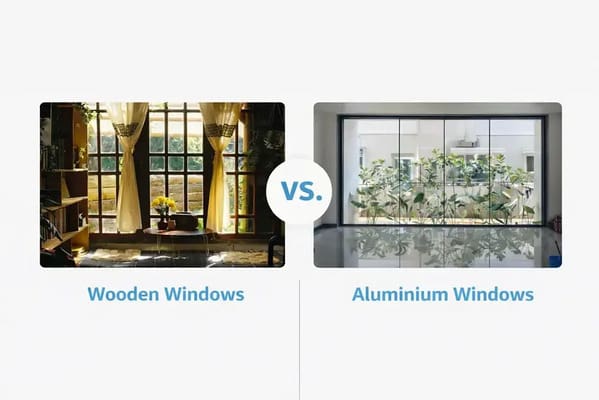
Wooden vs Aluminium Windows: Quick Comparison
| Factor | Wooden Windows | Aluminium Windows |
|---|---|---|
| Appearance | Warm, natural and premium | Sleek and contemporary |
| Structural Strength | Good with quality timber | Excellent |
| Maintenance | Moderate to high | Low |
| Termite Risk | Possible without protection | No termite damage |
| Moisture Resistance | Requires proper treatment | Very good with quality finish |
| Thermal Performance | Naturally good | Depends on system; thermal-break options perform better |
| Large Openings | Possible but needs suitable design | Excellent |
| Frame Profile | Usually thicker | Can be very slim |
| Colour Options | Stains, paints and natural finishes | Wide range of coated finishes |
| Best For | Classic, luxury and heritage-style homes | Modern homes and large openings |
Why Are Wooden Windows Still Popular?
Wood has been used for Indian doors and windows for generations, and its biggest advantage remains its natural appearance.
Every piece of timber has its own grain and texture. This creates visual warmth that synthetic or metallic finishes may try to imitate but cannot completely reproduce.
Wooden windows work particularly well with:
- Traditional Indian architecture
- Heritage properties
- Farmhouses
- Luxury villas
- Rustic interiors
- Premium natural-material designs
Different woods can provide different appearances, durability and price levels. However, timber quality, seasoning and treatment are extremely important.
Poor-quality or insufficiently seasoned wood can develop problems such as warping, cracking or dimensional changes over time.
Why Have Aluminium Windows Become So Popular?
Modern aluminium windows are significantly different from the simple metal windows commonly associated with older buildings.
Today’s systems can feature slim profiles, powder-coated finishes, sophisticated locking mechanisms, large glass panels and high-quality sliding or casement hardware.
Aluminium’s high strength-to-weight ratio makes it particularly useful for modern architectural designs.
It is commonly selected for:
- Apartments
- High-rise buildings
- Contemporary villas
- Large balcony windows
- Commercial properties
- Floor-to-ceiling glazing
For homeowners seeking a clean, minimalist appearance, aluminium is often an attractive choice.
Which Material Is More Durable?
Both materials can last for many years, but they behave differently.
Wooden Windows
Good-quality, properly treated timber can be extremely durable. Many older Indian homes demonstrate that well-maintained wooden windows can remain functional for decades.
However, wood is a natural material and can react to environmental conditions.
Potential problems include:
- Termite attack
- Moisture absorption
- Swelling
- Warping
- Cracking
- Paint or polish deterioration
Correct seasoning, treatment, finishing and maintenance are therefore essential.
Aluminium Windows
Aluminium does not rot or suffer termite damage. High-quality profiles with appropriate powder coating or anodised finishes can resist weather exposure very effectively.
The frame itself may require relatively little maintenance, although rollers, hinges, locks, gaskets and other components can wear and require servicing.
For homeowners prioritising low-maintenance durability, aluminium generally has an advantage.
Termites: An Important Indian Consideration
Termites can be a serious concern in many Indian homes, particularly where wood is exposed to moisture or where termite activity already exists in the building.
Wooden windows should therefore use appropriately treated timber and proper protective finishing.
Regular inspection is also sensible.
Watch for signs such as:
- Hollow-sounding wood
- Fine wood dust or debris
- Small holes
- Damaged edges
- Visible termite activity
Aluminium itself is not a food source for termites, giving it a clear advantage in this area.
However, choosing aluminium windows does not protect other wooden components in your house from termites.
Which Is Better During the Monsoon?
Indian monsoons can be demanding on windows.
Repeated exposure to moisture can affect inadequately protected wooden frames. If water enters untreated areas, wood may swell or experience deterioration.
Good-quality exterior coatings and proper drainage around the window are therefore important.
Aluminium handles moisture more easily because it does not absorb water.
High-quality coated aluminium frames can perform particularly well in rainy and humid environments.
However, water leakage is not determined by the frame material alone.
It also depends on:
- Window design
- Gaskets and seals
- Drainage channels
- Fabrication quality
- Wall sealing
- Installation
Even an expensive aluminium window can leak if installed incorrectly.
Which Is Better for Coastal Areas?
Homes in cities such as Mumbai, Chennai, Kochi and Goa can experience high humidity and salt-laden air.
Wood requires appropriate treatment and maintenance in these conditions because persistent moisture can affect its performance.
Aluminium can be highly suitable for coastal applications, but the quality of its protective finish becomes particularly important. Hardware and fasteners should also be appropriate for corrosive environments.
Cheap metal components can deteriorate even if the main aluminium profile remains in good condition.
Therefore, coastal homeowners should evaluate the entire window system, not only the frame.
Thermal Insulation: Does Wood Have an Advantage?
Wood is naturally a relatively poor conductor of heat compared with metal, which gives wooden frames useful thermal-insulation characteristics.
Standard aluminium conducts heat much more readily.
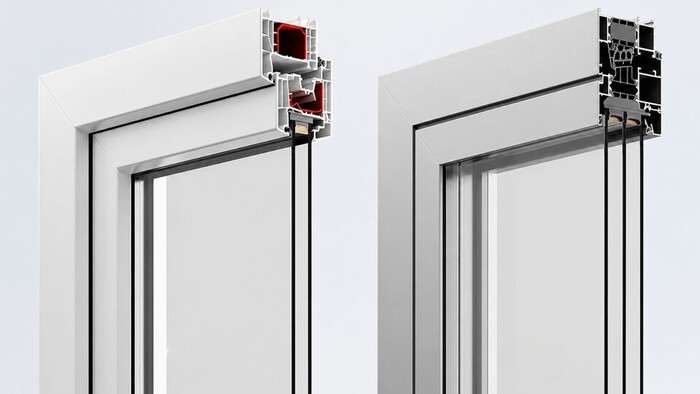
However, premium aluminium systems can use a thermal break—an insulating section separating interior and exterior aluminium components—to reduce heat transfer.
This can substantially improve thermal performance.
The glass remains equally important because it occupies most of the window area in many modern designs.
For rooms experiencing excessive heat, consider the complete combination of:
- Frame
- Glass
- Window orientation
- Shading
- Sealing
- Curtains or blinds
Choosing wood alone will not solve a heat problem if a large area of unsuitable glass receives direct afternoon sunlight.
Which Is Better for Noise Reduction?
Neither wood nor aluminium automatically guarantees a quiet room.
Effective sound insulation depends heavily on how well the entire window closes and seals.
Important factors include:
- Glass thickness
- Laminated or acoustic glazing
- Double glazing where appropriate
- Gasket quality
- Frame design
- Locking system
- Installation
A high-quality wooden casement window with good sealing can perform very well.
Similarly, a premium aluminium system designed for strong airtightness and fitted with appropriate acoustic glass can significantly reduce outside noise.
For homes near busy roads, railway lines or markets, prioritise the complete acoustic specification rather than frame material alone.
Maintenance: Where Aluminium Has a Clear Advantage
Maintenance is one of the biggest practical differences.
Wooden windows may periodically require:
- Painting
- Polishing
- Protective coating
- Termite inspection
- Crack repair
- Checking for moisture damage
- Adjustment if swelling affects operation
Maintenance frequency varies depending on timber quality, exposure and finish.
Aluminium frames generally need much less attention.
Typical maintenance includes:
- Cleaning frames
- Cleaning sliding tracks
- Checking drainage holes
- Inspecting rollers or hinges
- Lubricating suitable moving hardware
- Replacing worn seals when necessary
For homeowners who do not want periodic painting or polishing, aluminium is usually more convenient.
Which Looks More Premium?
This depends entirely on the design language of the property.
Wood offers a natural richness that works particularly well with stone, marble, traditional furniture and warm interiors. For heritage or luxury architecture, genuine timber can become an important visual feature.
Aluminium creates a different premium appearance.
Slim dark frames combined with large glass panels can produce the minimalist look commonly seen in contemporary architecture.
Therefore:
Traditional warmth → Wood has an advantage.
Modern minimalism → Aluminium often has an advantage.
Neither material is inherently more luxurious; execution and overall architectural design matter.
Which Is Better for Large Windows?
Aluminium is particularly strong in this category.
Its structural strength allows relatively slim profiles to support large glass panels.
This makes it suitable for:
- Large balcony openings
- Wide sliding windows
- Floor-to-ceiling glass
- Large fixed windows
- Contemporary façades
Wood can also be used for substantial windows, but profile dimensions and structural design must be carefully considered.
For very large modern openings where maximum glass area and minimal frame visibility are desired, aluminium is often the more practical choice.
Cost: Which Is More Affordable?
There is no universal answer because both wooden and aluminium windows cover a wide price range.
Wooden-window cost depends heavily on:
- Type and grade of timber
- Seasoning and treatment
- Frame dimensions
- Joinery
- Finish
- Hardware
- Glass
- Custom craftsmanship
Premium hardwood windows can be expensive.
Aluminium-window pricing depends on:
- Profile series
- Section thickness
- Finish
- Hardware
- Glass
- Opening mechanism
- Thermal-break technology
- Window dimensions
Instead of comparing only the initial quotation, consider lifetime cost.
A cheaper wooden window requiring frequent repair and refinishing may eventually cost more. Similarly, a low-quality aluminium system with weak rollers and poor hardware can create recurring repair expenses.
Which Should You Choose for Your Indian Home?
Choose wooden windows if you prioritise:
- Natural appearance
- Traditional architecture
- Premium craftsmanship
- Warm interior aesthetics
- Natural frame insulation
- Restoration of heritage-style properties
Choose aluminium windows if you prioritise:
- Low maintenance
- Slim modern profiles
- Large glass openings
- Structural strength
- Termite resistance
- Contemporary design
You can also combine both materials within one property. For example, decorative wooden windows may suit formal or traditional areas, while aluminium can be used for large balconies and utility spaces.
Important Points Before Buying Windows
Regardless of the material, check:
- Frame/profile quality
- Glass specification
- Hardware brand and quality
- Locking mechanism
- Weather seals
- Drainage design
- Installation method
- Warranty
- After-sales service
The best material can still perform poorly if fabrication or installation is substandard.
FAQs
1. Which lasts longer in India: wooden or aluminium windows?
A. Both can last for many years when properly manufactured and maintained. Aluminium generally requires less maintenance and is unaffected by termites, while high-quality treated timber can also provide excellent longevity when protected from moisture and pests.
2. Are wooden windows better for keeping a room cool?
A. Wood naturally transfers less heat than standard aluminium, but the frame is only one part of the window. Glass type, window size, orientation, shading and airtightness can have a much greater effect on indoor heat. Thermally broken aluminium can also improve insulation substantially.
3. Which is better for a house near the sea?
A. Quality aluminium with an appropriate protective finish and corrosion-resistant hardware can be highly suitable for coastal environments. Wooden windows can also be used but generally require careful treatment and ongoing protection against moisture. Product quality is particularly important in coastal locations.
4. Can I replace old wooden windows with aluminium without changing the entire wall opening?
A. In many homes, replacement is possible using the existing opening, but the old frame condition, dimensions, waterproofing and fixing method must first be assessed. Accurate site measurement by an experienced installer is important before ordering the new aluminium system.