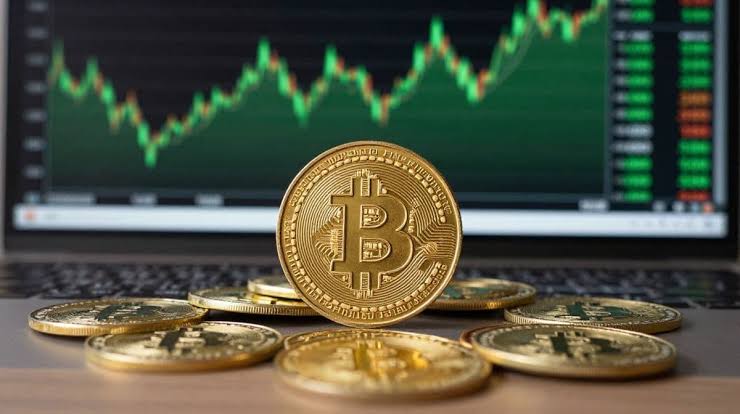
Cryptocurrency is so volatile because it is a young, smaller, always-open market whose prices rest largely on belief, adoption, and sentiment rather than on earnings or interest payments. A leading stock index might move a percent or two on a busy day, while a major coin can move ten percent in hours. Even Bitcoin, the largest and most established asset in the field, reportedly traded in a range of roughly $57,000 to $96,000 during 2026, a drop of about 40% from top to bottom within a single year. These swings aren’t random: they come from specific features of how crypto markets are built and who trades in them. Understanding those features helps you size positions sensibly and stay calm when prices move. This is general information rather than investment advice.

What Volatility Actually Means
Volatility measures how much and how quickly a price moves up and down. High volatility means larger swings in both directions, which creates opportunity and risk together.
- Stocks and bonds tend to move in narrower ranges, anchored by earnings, interest payments, and decades of valuation history.
- Gold is a store of value with a very long record, and it typically moves less than crypto.
- Fixed deposits and savings accounts pay a set interest rate, and bank balances don’t fluctuate day to day.
- Cryptocurrencies have historically shown price swings several times larger than major stock indices.
1. A Younger, Smaller Market
Bitcoin launched in 2009, and most other coins are far newer, so crypto has a short history compared with stocks, bonds, and gold.
- Smaller total value. The entire crypto market is much smaller than global equity or bond markets, so large buy or sell orders can move prices more.
- Less price history. Investors have fewer decades of data on how these assets behave in different conditions.
- Evolving understanding. Markets are still debating how to value networks, so views can change quickly.
In a small pond, a big splash travels farther.
2. No Earnings or Interest to Anchor Value
A stock can be compared with a company’s profits, and a bond pays a known coupon. Most cryptocurrencies don’t produce cash flows in the same way, so their value rests on other factors:
- Adoption and network growth
- Scarcity and supply rules
- Utility and developer activity
- Expectations about the future
Because those factors are forward-looking and debated, price estimates can differ widely, and shifting expectations move prices fast.
3. Trading Never Stops
Traditional exchanges close in the evening and on weekends, which gives investors time to digest news. Crypto markets run 24 hours a day, every day.
- News hits immediately. A headline at 3 a.m. on a Sunday can move prices before most people wake up.
- No cooling-off period. Many crypto venues have no equivalent of the trading halts that stock exchanges use during sharp falls.
- Global participation. Traders from every time zone act on the same information at once.
4. Leverage and Liquidations
Crypto platforms offer leveraged trading, where traders borrow to take bigger positions than their own money would allow.
- Magnified moves. Leverage amplifies both gains and losses.
- Forced selling. When prices move against a leveraged trader and their collateral runs low, positions are closed automatically, which can add selling pressure.
- A sharp fall can trigger a chain of liquidations, pushing prices down further and faster, and the same effect can work in reverse during rallies.
This feedback loop is one of the main reasons crypto prices can move far in short periods.
5. Sentiment and Retail Participation
Crypto attracts many individual investors, and sentiment can swing between enthusiasm and fear.
- Social media and news cycles influence behaviour quickly.
- Fear of missing out can fuel rallies, and fear of loss can accelerate sell-offs.
- Narratives change fast, such as shifts in views on regulation, technology, or macro trends.
When many participants react to the same signals together, price moves can become exaggerated.
6. Liquidity Can Be Thin
Liquidity means how easily you can buy or sell without moving the price.
- Major coins such as Bitcoin and Ether usually have deep markets on large exchanges.
- Smaller coins often have shallow order books, so even modest trades can shift prices noticeably.
- Liquidity can vanish in stress, making swings sharper when everyone heads for the exit.
7. Sensitivity to News and Regulation
Policy announcements, regulatory decisions, product approvals, and major institutional moves can shift expectations quickly.
- Positive developments, such as new regulated products or clearer rules, can lift prices.
- Uncertainty or restrictions in major markets can weigh on prices.
- Different rules across countries add layers of uncertainty, and the regulatory picture keeps evolving.
8. Supply Events and Token Design
Crypto assets have rule-based supply, and events tied to those rules can influence prices.
- Halvings reduce new Bitcoin issuance roughly every four years, and markets often anticipate them.
- Token unlocks release previously locked tokens into circulation, which can add selling pressure.
- Burn and staking mechanisms change the available supply over time.
9. Links to the Wider Economy
Crypto was once seen as independent of traditional markets, but in recent years it has often moved alongside risk assets.
- Interest rates and liquidity conditions influence appetite for risky assets.
- Global economic news can lift or lower demand.
- Investor risk appetite tends to rise and fall together across stocks and crypto.
10. Concentrated Holdings
A relatively small number of large holders (often called whales) own a significant share of some coins, so a few large trades can move prices, especially in less liquid assets.
Why Volatility Matters More Than It Seems
Big drops are harder to recover from than they look, because percentages work asymmetrically.
- A 40% fall turns ₹1,00,000 into ₹60,000, and recovery requires a gain of about 67%.
- A 50% fall requires a gain of 100% to get back to the starting point.
So limiting large losses matters as much as chasing gains.
Could Volatility Settle Down?
Several developments may moderate swings over time, though none can eliminate them:
- Regulated products such as spot ETFs bring steadier, long-term institutional demand.
- Deeper liquidity reduces the impact of single trades.
- Clearer regulation can reduce uncertainty.
- Growing real-world use may anchor demand in utility.
Even so, crypto is likely to remain more volatile than traditional assets for the foreseeable future.
Practical Ways to Handle Volatility
- Size positions modestly. Invest only what you can afford to see fall sharply.
- Use regular investing. Putting in a fixed amount at intervals, such as a monthly SIP, reduces the pressure of timing the market.
- Avoid leverage unless you fully understand liquidation risk.
- Keep crypto as one part of a broader portfolio that includes more stable assets.
- Keep an emergency fund so you never have to sell during a downturn.
- Think in years, not days. A long horizon helps you ride out short-term swings.
- Have a plan, including how much to buy, when to rebalance, and when you’d sell.
- Mind the tax rules. In India, crypto gains are taxed and TDS applies on transactions, so keep records.
Frequently Asked Questions
Q1. Is crypto always more volatile than stocks?
Historically yes, major cryptocurrencies have moved several times more than major stock indices, although the gap can narrow in calm periods.
Q2. Does a larger market cap mean lower volatility?
Generally yes, since larger, more liquid assets such as Bitcoin tend to swing less than smaller coins, though they still move far more than most traditional investments.
Q3. Why do crypto prices fall so fast during sell-offs?
Leverage-driven liquidations, thin liquidity, round-the-clock trading, and sentiment can combine to speed up declines.
Q4. Will ETFs make crypto less volatile?
They can add steadier demand and deeper participation, which may moderate swings over time, but they don’t remove volatility.
Q5. How can I reduce the impact of volatility on my investments?
Invest regularly in modest amounts, avoid leverage, diversify across asset types, and keep an emergency fund so you aren’t forced to sell during downturns.