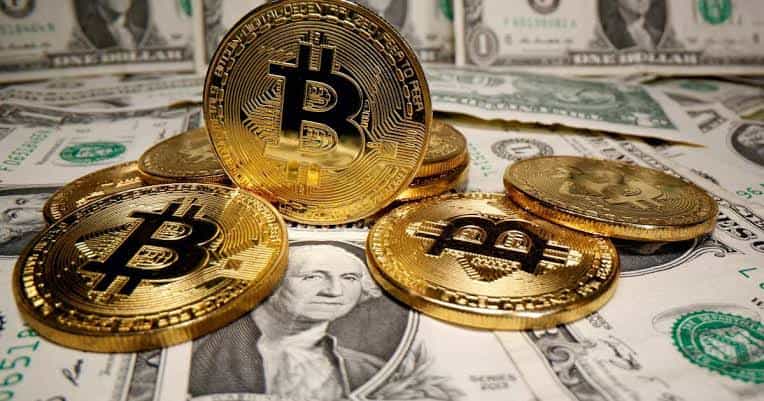
Bitcoin is limited to 21 million coins because its software was designed that way from the start: new coins are issued as rewards to the computers that secure the network, and that reward is programmed to shrink by half every 210,000 blocks until it effectively reaches zero. Add up every reward ever scheduled, and the total lands at just under 21 million. The cap wasn’t a rounded-up marketing number or an arbitrary rule bolted on later. It falls out of a simple piece of arithmetic baked into Bitcoin’s code, and it’s the main reason people call Bitcoin “digital gold.” Here’s how the maths works, why the creator likely chose this design, and what the limit means in practice. This is general information, not investment advice.

The Arithmetic Behind the Number
Bitcoin’s issuance follows a schedule that anyone can verify.
- Blocks arrive about every 10 minutes. Each new block of transactions earns the miner a reward of newly created bitcoin.
- The reward started at 50 BTC per block when the network launched in January 2009.
- Every 210,000 blocks (roughly four years), the reward is cut in half. This event is called the halving.
- Rewards keep halving until they become too small to represent.
Now the sum: 210,000 blocks × (50 + 25 + 12.5 + 6.25 + …) is a series that adds up to 210,000 × 100, which is 21 million. In practice it comes out a hair below that, because rewards are rounded down at the smallest unit, so the true limit is a fraction under 21,000,000 coins.
The Halving Timeline
The schedule so far, and what’s ahead:
- 2009: the reward starts at 50 BTC per block
- November 2012: the first halving, to 25 BTC
- July 2016: the second, to 5 BTC
- May 2020: the third, to 25 BTC
- April 2024: the fourth, to 125 BTC
- Around April 2028: the next, to 5625 BTC
Each halving makes new supply grow more slowly. Roughly 20 million of the 21 million coins have already been mined, with the 20 millionth arriving in 2026, which means about 95% of all bitcoin that will ever exist has already been issued. The remaining coins will trickle out over more than a century, with the final fractions expected around the year 2140.
How Small Can a Bitcoin Get?
A cap of 21 million sounds small, but bitcoin is divisible.
- One bitcoin equals 100 million satoshis. A satoshi, the smallest unit, is 0.00000001 BTC.
- That makes about 2.1 quadrillion units in total, so the supply can handle everyday-sized amounts even if each coin becomes very valuable.
- You don’t need a whole coin. People routinely buy small fractions.
Why Did the Creator Choose a Cap?
Bitcoin’s pseudonymous creator, Satoshi Nakamoto, published the design in a 2008 paper and launched the network in 2009. The exact reasoning for 21 million was never spelled out in detail, but the broader motivations are clear from the design and writings.
- A predictable money supply. Anyone can calculate how many coins will exist at any date, with no central bank deciding to print more.
- Resistance to inflation by design. Traditional currencies can lose purchasing power when governments expand the money supply, while Bitcoin’s issuance is fixed by code.
- A digital version of scarcity. Gold is valuable partly because it’s hard to find and mine, and Bitcoin’s capped supply gives a digital asset a comparable property.
- An incentive for early support. A finite supply rewards those who help the network grow, and the declining reward schedule encourages participants to secure it from the beginning.
- A fixed, transparent rule is easy to audit and hard to dispute.
What the Cap Means for Value
A limited supply doesn’t guarantee a rising price, but it shapes how Bitcoin behaves.
- Supply is inelastic. If demand rises, new coins can’t be created to meet it, so prices adjust instead.
- Issuance falls over time. Each halving reduces the rate of new supply, so the yearly increase becomes small compared with the existing stock.
- Scarcity needs demand. A rare asset nobody wants has little value, so Bitcoin’s worth also depends on adoption, usefulness, and trust.
- Lost coins make it scarcer still. Coins stored in wallets whose keys have been lost can never move again, and estimates suggest a meaningful portion of the supply is out of circulation permanently.
What Happens After the Last Coin Is Mined?
Miners currently earn two kinds of income: new coins (the block reward) and transaction fees paid by users. As the block reward shrinks, fees are expected to become the main incentive.
- Fees keep the network secured. After the last coin is mined, miners will rely on fees.
- Security depends on fee levels. How much fee income is needed to keep the network secure is an active discussion among developers and researchers.
- The network keeps running. Transactions continue, and miners continue to earn fees, rather than the system stopping.
Can the 21 Million Limit Be Changed?
In theory, Bitcoin is open-source software, so anyone can propose a change. In practice, altering the cap is extremely unlikely.
- Changes need broad agreement. Node operators, miners, developers, exchanges, and users all have to adopt new rules, and no single party can force it.
- Holders have strong reasons to resist. The fixed supply is a core part of Bitcoin’s identity and appeal.
- A change could split the network. A group that disagrees can keep running the original rules, and the market would decide which version holds value.
For these reasons, the supply limit is widely viewed as one of the most secure features of the system.
How Other Cryptocurrencies Compare
Not every coin copies Bitcoin’s approach.
- Litecoin has a cap of 84 million coins.
- Ethereum has no fixed cap, but it has mechanisms that burn part of transaction fees, which can offset new issuance.
- Some coins have no cap at all, so their supply can keep growing.
- Many tokens set their own schedules, including pre-mined supplies, unlock periods, and burn rules.
Supply design is one of the first things to check when evaluating any cryptocurrency.
Points Worth Remembering
- The cap is a rule of the software, not a promise about price. Bitcoin’s value can still rise or fall sharply.
- Fractions are possible. You don’t need to own a whole coin.
- Most coins are already mined, but supply growth slows each halving.
- Taxes and local rules apply. In India, for example, crypto gains are taxed and TDS applies on transactions, so keep records.
Frequently Asked Questions
Q1. Why exactly 21 million and not another number?
It results from starting at 50 coins per block and halving the reward every 210,000 blocks, which adds up to just under 21 million, though the creator never explained every reason for choosing those parameters.
Q2. How many bitcoins have been mined so far?
Roughly 20 million, about 95% of the total supply, with the 20 millionth coin arriving in 2026.
Q3. When will the last bitcoin be mined?
Around the year 2140, because the reward keeps halving and becomes negligible long before then.
Q4. Can more than 21 million bitcoins ever be created?
Not under the current rules, and changing the cap would require near-universal agreement across the network, which is considered very unlikely.
Q5. What will miners earn after all coins are mined?
They’ll earn transaction fees, and how well fees can sustain network security is an ongoing area of discussion.