Choosing a programming language in 2026 can feel more confusing than it did a few years ago. Artificial intelligence can now generate code, explain errors and help developers build applications faster, yet programming skills remain highly valuable. The difference is that employers increasingly need developers who can understand problems, design reliable solutions, review AI-generated code and work with modern software ecosystems—not simply memorise syntax.
The right language depends on what you want to build. A student interested in AI may benefit from Python, while someone targeting frontend development will need JavaScript or TypeScript. Java and C# remain important for enterprise software, while C and C++ continue to matter wherever performance and low-level control are essential.
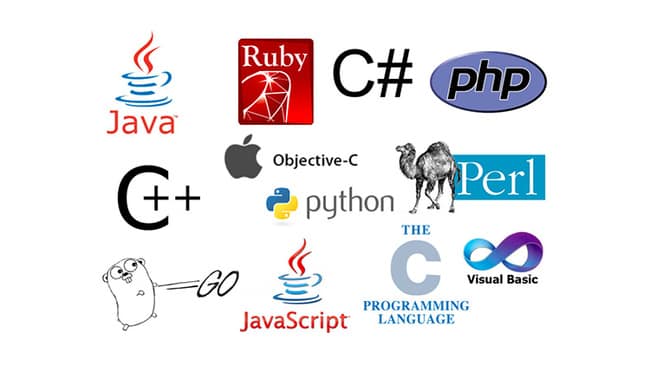
Rather than chasing whichever language is trending on social media, consider its ecosystem, job relevance, learning curve and suitability for your career goals.
Here are the top 10 programming languages to learn in 2026.
Top 10 Programming Languages in 2026 at a Glance
| Rank | Language | Best For | Learning Level |
|---|---|---|---|
| 1 | Python | AI, data science, automation, backend | Beginner-friendly |
| 2 | JavaScript | Web development | Beginner-friendly |
| 3 | TypeScript | Modern large-scale web apps | Intermediate |
| 4 | Java | Enterprise and Android/backend systems | Intermediate |
| 5 | C++ | Performance, systems, games | Advanced |
| 6 | C# | .NET, enterprise apps, games | Intermediate |
| 7 | Go | Cloud services and backend systems | Intermediate |
| 8 | Rust | Systems and memory-safe development | Advanced |
| 9 | SQL | Databases and data-driven applications | Beginner-friendly |
| 10 | C | Embedded and low-level programming | Intermediate |
1. Python – Best for AI, Data Science and Beginners
Python remains one of the strongest languages to learn in 2026 because it combines readable syntax with an enormous ecosystem.
It is widely used in:
- Artificial intelligence
- Machine learning
- Data science
- Automation
- Backend development
- Scientific computing
- Scripting
- Cybersecurity tooling
Python has become particularly important because of the rapid expansion of AI.
Popular libraries and frameworks allow developers to work with machine learning, data analysis, web applications and automation without building everything from scratch.
For beginners, Python’s relatively clean syntax allows more attention to be placed on programming concepts such as loops, functions, data structures and problem solving.
Best for: Beginners, AI developers, data professionals, automation engineers and backend developers.
2. JavaScript – Essential for Web Development
If you want to become a web developer, JavaScript remains difficult to avoid.
HTML provides structure and CSS handles presentation, while JavaScript makes web pages interactive.
It powers functionality such as:
- Interactive interfaces
- Form validation
- Dynamic page updates
- Web applications
- Animations
- API interactions
JavaScript is not restricted to browsers.
With technologies such as Node.js, developers can also use JavaScript for server-side development.
Its massive ecosystem makes it possible to build frontend interfaces, backend services and even mobile or desktop applications using related technologies.
Beginners interested in web development should usually learn HTML and CSS alongside JavaScript rather than studying JavaScript completely in isolation.
Best for: Frontend developers, full-stack developers and anyone building modern websites.
3. TypeScript – Increasingly Important for Modern Web Apps
TypeScript builds on JavaScript by adding a stronger type system and development-time tooling.
JavaScript is extremely flexible, but that flexibility can make large applications harder to maintain.
TypeScript can identify many potential mistakes before the code reaches production.
For example, it can help detect when a program attempts to use the wrong type of value in a particular part of an application.
Its advantages become especially noticeable in:
- Large frontend applications
- Team projects
- Complex backend systems
- Long-term codebases
TypeScript is commonly used with modern JavaScript frameworks and Node.js projects.
Should a complete beginner start with TypeScript?
Learning basic JavaScript first is often helpful because TypeScript builds directly on JavaScript concepts.
Best for: Web developers, full-stack developers and teams building large JavaScript applications.
4. Java – Still Powerful for Enterprise Development
Java has existed for decades, yet it remains highly relevant.
Large companies, financial institutions and enterprise software teams continue to maintain and build Java-based systems.
Java is commonly used for:
- Enterprise applications
- Backend services
- Banking systems
- Large business platforms
- Android-related development
- Cloud applications
The Spring ecosystem, particularly Spring Boot, remains important for backend development.
For Indian students and developers targeting enterprise IT careers, Java continues to be a practical language because many organisations operate substantial Java codebases.
It also teaches useful programming concepts such as object-oriented design and strongly typed development.
Best for: Enterprise developers, backend engineers and students preparing for software-development careers.
5. C++ – Best for Performance-Critical Software
C++ offers significantly more low-level control than languages such as Python.
That makes it more difficult to master, but also extremely powerful.
It is used where performance and efficient resource management matter.
Common areas include:
- Game development
- Game engines
- Operating-system components
- High-performance applications
- Robotics
- Financial systems
- Embedded software
- Simulation
C++ is also widely encountered in competitive programming.
Learning it can deepen your understanding of memory, data structures, algorithms and how software interacts with computer hardware.
However, beginners interested primarily in web development or AI application development may get productive faster with another language.
Best for: Performance-focused developers, game programmers and systems engineers.
6. C# – Strong for .NET and Game Development
C# is closely associated with Microsoft’s .NET ecosystem.
It combines modern language features with a mature development environment and is widely used for business applications and backend systems.
C# can be used for:
- Web APIs
- Enterprise applications
- Cloud services
- Desktop applications
- Backend development
- Game development
Game developers also know C# because of its long-standing association with Unity.
For businesses already operating within Microsoft’s technology ecosystem, C# and .NET can provide a natural development stack.
Its structured syntax also makes it useful for developers who want to learn strongly typed, object-oriented programming.
Best for: .NET developers, enterprise programmers, backend developers and game developers.
7. Go – Excellent for Cloud and Backend Engineering
Go, also known as Golang, was created at Google and has become particularly popular in cloud infrastructure and backend engineering.
Its design emphasises simplicity and efficient software development.
Go is commonly associated with:
- Cloud services
- APIs
- Microservices
- Networking tools
- DevOps infrastructure
- Distributed systems
Many important cloud-native technologies have been built using Go, helping the language develop a strong reputation among infrastructure engineers.
Go also has built-in language features that make concurrent programming relatively approachable compared with some lower-level alternatives.
It may not have the massive general-purpose ecosystem of Python or JavaScript, but it is an excellent choice for developers targeting modern backend and cloud infrastructure roles.
Best for: Backend engineers, cloud developers, DevOps professionals and infrastructure engineers.
8. Rust – Growing Choice for Safe Systems Programming
Rust is designed to provide high performance while preventing many categories of memory-related programming errors.
Traditional systems languages provide extensive control over memory, but mistakes can create serious bugs and security vulnerabilities.
Rust’s ownership and borrowing system helps enforce memory-safety rules during compilation.
It is increasingly used for:
- Systems programming
- Developer tools
- Networking software
- Performance-sensitive services
- Security-focused applications
- Embedded development
Rust has a steeper learning curve than Python or JavaScript.
Concepts such as ownership, borrowing and lifetimes can initially feel unfamiliar.
For developers interested in systems programming, however, learning Rust can be a valuable long-term investment.
Best for: Experienced programmers, systems developers and performance/security-focused engineers.
9. SQL – Essential for Working With Data
SQL is different from most languages on this list because it is primarily designed for interacting with relational databases.
Yet it is one of the most useful technical skills a developer or data professional can learn.
Applications constantly need to store and retrieve information such as:
- Customer accounts
- Orders
- Payments
- Products
- Articles
- Employee records
- Analytics data
SQL allows developers to query and manipulate structured data.
Core skills include understanding:
- SELECT queries
- JOINs
- GROUP BY
- Aggregations
- Subqueries
- Indexes
- Database relationships
SQL is valuable alongside almost every major backend programming language.
It is also important for data analysts and business-intelligence professionals.
Best for: Backend developers, data analysts, data engineers and full-stack developers.
10. C – Best for Understanding Low-Level Programming
C is one of the most influential programming languages ever created.
Although it is older than most languages on this list, it remains important in areas where developers need direct control over hardware and system resources.
C is used in:
- Embedded systems
- Microcontrollers
- Operating systems
- Device drivers
- Firmware
- Electronics
- Internet of Things devices
Learning C can also provide a deeper understanding of concepts hidden by higher-level languages.
These include:
- Memory allocation
- Pointers
- Data representation
- Compilation
- Hardware interaction
C may not be the fastest path to building a modern web application, but it remains extremely valuable for understanding how computers work at a lower level.
Best for: Embedded developers, electronics students and systems programmers.
Which Programming Language Should You Learn First?
Do not choose purely based on rankings.
Choose according to your goal:
- AI and machine learning: Python
- Frontend web development: JavaScript → TypeScript
- Full-stack web development: JavaScript/TypeScript + SQL
- Enterprise backend: Java or C#
- Cloud/backend infrastructure: Go
- Game development: C++ or C#
- Systems programming: C++, Rust or C
- Data analytics: SQL + Python
- Embedded systems: C or C++
More importantly, avoid trying to learn five languages simultaneously.
Learn one language properly, build real projects and understand programming fundamentals before constantly switching technologies.
Does AI Make Learning Programming Less Important?
AI can generate functions, explain errors and create code quickly, but developers still need to understand what that code does.
A programmer using AI effectively should be able to:
- Identify incorrect output.
- Debug problems.
- Understand security risks.
- Design application architecture.
- Test generated code.
- Review performance.
- Translate business requirements into software.
In 2026, the valuable skill is increasingly programming with AI rather than competing against AI at typing code.
FAQs
1. Which programming language is best for beginners in 2026?
A. Python is one of the easiest general-purpose starting points because of its readable syntax. If your goal is specifically web development, JavaScript is another excellent first choice.
2. Which programming language has the best career opportunities?
A. Python, JavaScript/TypeScript, Java, C# and SQL are broadly useful across many roles. The best career choice depends more on the technology stack and job role than on one language alone.
3. Should I learn Python or Java first?
A. Choose Python if you are interested in AI, automation, data science or easier introductory programming. Choose Java if your primary goal is enterprise backend development or you want to develop strong foundations in statically typed object-oriented programming.
4. Is learning coding still worth it when AI can write code?
A. Yes. AI reduces the amount of routine code developers need to write manually, but understanding programming, debugging, architecture, security and problem solving remains essential. Developers who can combine strong fundamentals with AI tools are likely to be more effective than those who depend on generated code without understanding it.