A plumbing system may remain hidden inside walls or underground for decades, which makes pipe selection an important decision during home construction or renovation. A pipe that performs well initially can later become a source of low water pressure, leakage, corrosion or expensive repairs if it is unsuitable for the application. For Indian homeowners, the comparison between GI pipes and PVC pipes is particularly relevant because both are widely recognised but have very different characteristics.
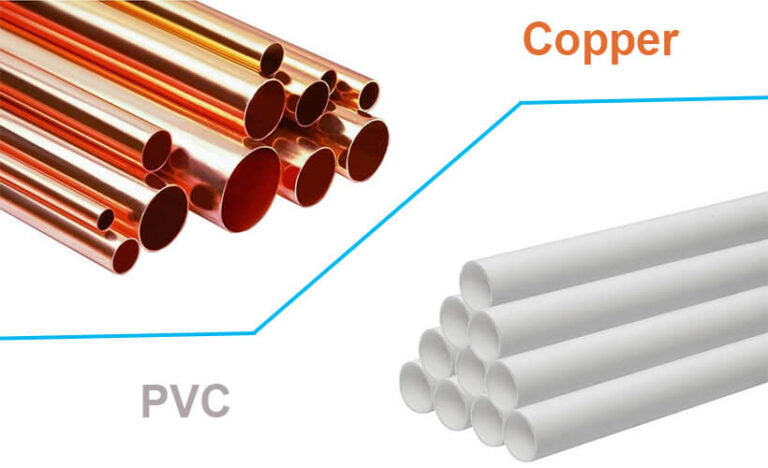
GI pipes are metal pipes protected with a zinc coating and have traditionally been used for water-supply lines. PVC pipes are lightweight plastic pipes valued for corrosion resistance, affordability and ease of installation. Today, however, plumbing systems are more specialised, and neither material should be used everywhere simply because it is familiar or inexpensive.
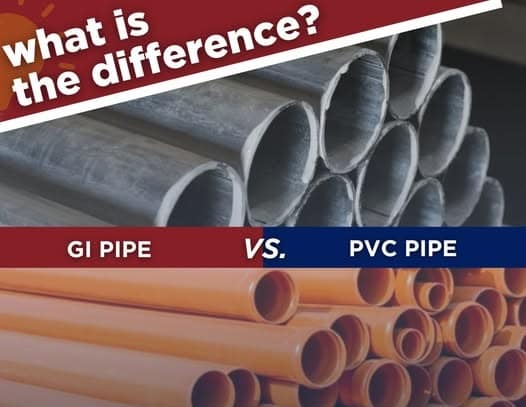
The right choice depends on whether the pipe carries drinking water, drainage or cold water, as well as pressure, temperature, exposure, water quality and installation conditions.
GI Pipes vs PVC Pipes: Quick Comparison
| Factor | GI Pipes | PVC Pipes |
|---|---|---|
| Material | Zinc-coated steel | Polyvinyl chloride |
| Weight | Heavy | Lightweight |
| Corrosion Resistance | Zinc coating provides protection, but corrosion can develop over time | Does not rust |
| Hot-Water Use | Depends on pipe/system specification | Conventional PVC generally unsuitable |
| Cold-Water Use | Traditionally used | Suitable with appropriate pressure-rated product |
| Drainage | Possible but less common in modern homes | Widely used |
| Installation | More labour-intensive | Relatively easy |
| Internal Scaling | Can develop over time | Generally less prone to rust-related build-up |
| Initial Cost | Often higher | Generally economical |
| Maintenance | May increase with age | Usually relatively low |
What Are GI Pipes?
GI stands for Galvanised Iron, although the pipes commonly referred to as GI are essentially steel pipes coated with zinc.
The zinc layer helps protect the underlying metal from corrosion.
GI pipes were extensively used in older Indian homes for:
- Water-supply lines
- Outdoor plumbing
- Pump connections
- Utility piping
- Certain exposed installations
Their strength and rigidity made them a familiar choice before modern plastic plumbing systems became widespread.
However, galvanisation does not make the pipe permanently corrosion-proof. Over time, the protective layer can deteriorate, particularly under unfavourable water or environmental conditions.
What Are PVC Pipes?
PVC stands for Polyvinyl Chloride.
It is a plastic piping material available in multiple sizes, wall thicknesses and pressure classes.
PVC is widely used in Indian residential construction for applications such as:
- Drainage
- Soil and waste lines
- Rainwater pipes
- Irrigation
- Vent systems
- Suitable cold-water applications
Its biggest practical advantages are low weight, corrosion resistance and comparatively easy installation.
However, conventional PVC should not be confused with CPVC. CPVC has different properties and is designed for higher-temperature plumbing applications.
Corrosion: The Biggest Difference
Corrosion is one of the most important differences between GI and PVC.
GI pipe receives protection from its zinc coating, but that protection does not necessarily last indefinitely.
As the plumbing system ages, corrosion may develop internally or externally.
Possible symptoms include:
- Discoloured water
- Reduced water flow
- Rough internal surfaces
- Rust deposits
- Leakage at weakened sections
PVC does not rust because it is non-metallic.
This gives it an important advantage where conventional metallic corrosion is a concern.
However, PVC has different vulnerabilities, including excessive temperature, UV exposure in unsuitable products, physical impact and incorrect solvent joints.
Which Is Better for Water Pressure?
A common assumption is that GI automatically handles pressure better because it is metal.
While GI is mechanically strong, pressure suitability should always be determined from the exact pipe specification.
PVC pipes are manufactured in different pressure classes. A properly selected pressure-rated PVC pipe can handle substantial cold-water pressure within its specified operating conditions.
For either material, homeowners should check:
- Working pressure
- Pipe diameter
- Wall thickness or class
- Pump pressure
- Building height
- Manufacturer specifications
A pipe that is too small can also cause poor flow even if it safely withstands the pressure.
Therefore, correct plumbing design matters as much as pipe material.
Water Flow as Pipes Become Older
GI plumbing can develop internal deposits and corrosion over time.
As the internal diameter effectively becomes smaller, homeowners may notice reduced flow from taps and showers.
This problem can be particularly frustrating in an older house where water pressure at the source appears adequate but bathroom flow remains poor.
PVC has a relatively smooth internal surface and does not develop rust-related narrowing.
This can help maintain hydraulic performance when the system is properly designed.
However, poor jointing, undersized pipes or debris can still restrict flow in PVC plumbing.
GI vs PVC for Drinking Water
For potable-water applications, pipe selection should be based on the specific product’s intended use and compliance, not merely the material name.
GI has historically been used for domestic water distribution, but water chemistry and pipe ageing can influence long-term performance.
For PVC, only use a product specifically intended and approved for potable-water applications when it is being used for drinking-water supply.
Before buying either type, check:
- Manufacturer
- Product markings
- Applicable standard
- Intended application
- Pressure class
- Potable-water suitability where required
Unmarked or unknown pipes should be avoided for permanent concealed water-supply systems.
Which Is Better for Hot Water?
Conventional PVC is generally not suitable for domestic hot-water distribution because it has lower temperature capability.
GI can tolerate higher temperatures than standard PVC, but whether it is the best solution depends on the overall plumbing design and product specification.
Modern Indian homes frequently use other materials for hot-water distribution, including appropriately rated:
- CPVC
- PPR
- Copper
If you are comparing GI and PVC specifically for a geyser line, conventional PVC should not be selected simply because it is cheaper.
Always verify the temperature and pressure rating of the chosen system.
Which Is Better for Drainage?
PVC generally has a strong practical advantage for residential drainage.
PVC drainage systems are widely used for:
- Toilets
- Bathrooms
- Kitchen waste
- Rainwater
- Soil stacks
- Vent lines
Advantages include:
- Lightweight construction
- No conventional rust
- Smooth internal surfaces
- Wide availability of fittings
- Relatively quick installation
- Competitive pricing
Using GI for ordinary household drainage can add unnecessary weight, installation complexity and potential long-term corrosion concerns.
The exact PVC drainage system should still be selected according to the application and applicable requirements.
Installation: GI vs PVC
The installation process differs significantly.
GI Pipe Installation
GI pipes are heavy and generally require more labour.
Installation may involve:
- Cutting
- Threading
- Fittings
- Sealing threaded joints
- Strong pipe supports
- Suitable tools
Incorrect threading or joint sealing can cause leakage.
PVC Pipe Installation
PVC is much lighter and easier to transport around a construction site.
Many systems use compatible solvent-cement joints.
Correct installation requires:
- Clean cuts
- Proper deburring
- Correct fittings
- Compatible solvent cement
- Proper insertion
- Adequate curing time
- Correct pipe supports
Easy installation does not mean workmanship can be ignored. Poor solvent joints are a common source of avoidable leaks.
Which Is Better for Concealed Plumbing?
Concealed plumbing requires special attention because future repairs may involve breaking walls or tiles.
PVC offers corrosion resistance, but only a correctly rated system should be concealed for the intended service.
GI offers mechanical strength but may eventually experience corrosion, making future replacement difficult if it is buried deeply inside finished walls.
Before concealing any water-supply pipe:
- Inspect every connection.
- Conduct the required pressure test.
- Check pipe supports.
- Verify correct materials and fittings.
- Photograph the pipe routes.
- Record important measurements.
- Avoid joints at unnecessarily inaccessible locations.
These simple precautions can save considerable time and money during future renovation or drilling.
Outdoor Plumbing: Which Performs Better?
GI’s mechanical strength can be useful in exposed locations where pipes could experience physical impact.
However, outdoor moisture can contribute to deterioration if the protective coating becomes damaged.
PVC does not rust, but prolonged sunlight can affect unsuitable PVC products.
For exposed outdoor installations, consider:
- UV suitability
- Physical protection
- Pipe support
- Temperature
- Rain exposure
- Risk of accidental impact
Neither material should simply be installed outdoors without considering environmental conditions.
Maintenance and Repairs
GI plumbing may require increasing maintenance as it becomes older.
Common issues can include:
- Corroded joints
- Restricted flow
- Rusting
- Difficult removal of old threaded fittings
Repairing an old GI network can sometimes reveal deterioration in adjacent sections.
PVC generally requires relatively little maintenance when properly installed. Damaged sections can often be replaced using compatible fittings.
However, repairs should use the correct PVC system rather than mixing random pipes, adhesives and fittings from incompatible applications.
Cost: GI or PVC?
PVC is generally more economical for many common residential applications.
It also tends to have lower handling and installation costs because it is lightweight and relatively quick to join.
GI can involve higher costs because of:
- Material weight
- Labour
- Threading
- Fittings
- Installation time
- Supports
But cost should never be compared without considering application.
A cheap PVC drainage pipe, for example, should not be compared with a pressure-rated GI water line as though both are intended for the same job.
Compare materials only after establishing the required:
temperature + pressure + water type + location + service conditions.
Common Mistakes Homeowners Should Avoid
When choosing between GI and PVC, avoid:
- Using ordinary PVC for hot-water lines
- Assuming all PVC pipes are pressure-rated
- Assuming GI never corrodes
- Buying unmarked plumbing materials
- Selecting pipes only by diameter
- Ignoring pressure ratings
- Mixing incompatible fittings
- Concealing pipes before testing
- Leaving unsuitable PVC continuously exposed to sunlight
- Choosing purely on the lowest quotation
The pipe itself is only one part of a reliable plumbing system. Fittings, valves, joints, supports and workmanship are equally important.
GI or PVC: Which Is Better for Your Home?
Choose an appropriate GI system when:
- High mechanical strength is required.
- The specified application calls for metal piping.
- Exposed pipes require additional rigidity.
- Suitable corrosion protection and maintenance can be provided.
Choose an appropriate PVC system when:
- You need drainage, waste or rainwater piping.
- Corrosion resistance is a priority.
- Lightweight installation is beneficial.
- An approved pressure-rated product meets the cold-water requirement.
- Cost efficiency is important.
For a modern Indian home, it is often unnecessary to choose only one pipe material for everything. Different sections of the plumbing network can use different materials according to their specific purpose.
FAQs
1. Is PVC better than GI for home plumbing?
A. PVC has advantages such as corrosion resistance, low weight and economical installation, particularly for drainage and suitable cold-water applications. GI offers greater mechanical rigidity. The better choice depends on the exact plumbing application rather than one material being universally superior.
2. Why does water pressure become low in old GI pipes?
A. Older GI pipes can develop corrosion and internal deposits that reduce the effective internal diameter. This restriction can lower water flow at taps and showers even when the incoming supply pressure has not changed.
3. Can PVC pipe be used for a geyser hot-water line?
A. Conventional PVC is generally not appropriate for domestic hot-water distribution. Hot-water lines should use a piping system specifically rated for the expected temperature and pressure, such as suitable CPVC, PPR, copper or another approved system.
4. Should I replace old GI pipes with PVC?
A. Not automatically. First determine whether the existing line carries cold water, hot water, drainage or another service. An appropriate PVC system may be suitable for some applications, while others may require CPVC, PPR or another material. Persistent corrosion, leakage or restricted flow should be assessed by a qualified plumber.