Cryptocurrency transactions take time to confirm because they don’t go through a central operator: thousands of independent computers have to receive the transaction, check it, bundle it into a block, and agree that the block is valid before it becomes part of the permanent record. A card payment feels instant because one company checks its own database and promises to settle later. A blockchain transfer is closer to getting a shared, tamper-resistant ledger to agree on a change, and that agreement takes real time. The wait can range from a few seconds on fast networks to an hour or more during busy periods on slower ones. Seeing what happens at each step explains the delay and shows what you can do about it. This is general information, not investment advice.
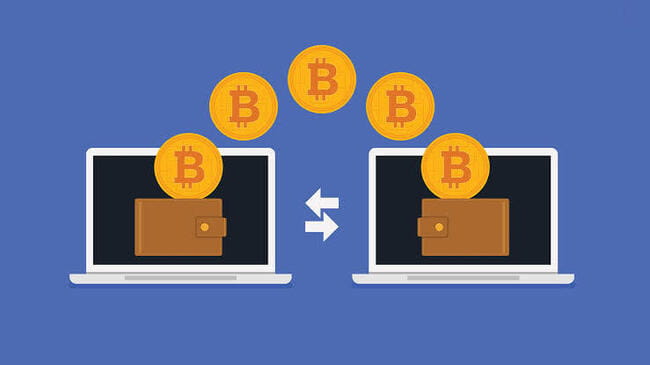
The Journey of a Transaction, Step by Step
Here’s what happens after you press “send”:
- Step 1: Signing. Your wallet signs the transaction with your private key, proving you own the funds without revealing the key.
- Step 2: Broadcasting. The signed transaction is sent to nodes, the computers that run the network, and they pass it along to others within seconds.
- Step 3: Validation. Each node checks that the signature is genuine, that you have enough funds, and that the same coins haven’t already been spent.
- Step 4: Waiting in the queue. Valid transactions wait in a holding area called the mempool (short for memory pool) until someone includes them in a block.
- Step 5: Block creation. Miners (on proof-of-work networks like Bitcoin) or validators (on proof-of-stake networks like Ethereum) pick transactions, usually favouring those paying higher fees, and assemble a block.
- Step 6: Consensus. The network checks the new block and agrees to add it to the chain. This is your first confirmation.
- Step 7: More confirmations. Each additional block built on top adds another confirmation, making the transaction harder to reverse.
The time you wait depends mostly on steps 4 through 7.
Reason 1: Blocks Are Produced at Intervals
Blockchains add transactions in batches, and each network sets its own pace.
- Bitcoin targets a new block roughly every 10 minutes. The network adjusts mining difficulty about every two weeks to keep that rhythm steady.
- Ethereum produces a new block about every 12 seconds, so a first confirmation can come quickly.
- Other networks use faster or slower designs, with some aiming for block times of a second or less.
If your transaction just misses a block, you may wait for the next one. On Bitcoin, the average gap is 10 minutes, but individual blocks can arrive faster or slower because mining is a game of chance.
Reason 2: The Fee Queue
Block space is limited, so transactions compete for it.
- Each block can hold only so much data, so not every waiting transaction fits.
- Miners and validators typically prioritise higher fees, since they earn them.
- During busy periods, the queue grows, and low-fee transactions can wait much longer.
- Fees are paid per unit of data or computation, not as a percentage of the amount, so a small transfer can cost as much as a large one.
If you set a fee that’s too low for current demand, your transaction can sit in the mempool for hours, or even days, until activity quietens.
Reason 3: Waiting for Multiple Confirmations
One confirmation means your transaction is in a block, but receivers often wait for more.
- Blocks can occasionally be replaced. Two miners can find a block almost at once, and the network eventually settles on one chain, discarding the other (a “reorganisation”).
- Each new block makes reversal harder, because an attacker would have to redo more work.
- A common rule of thumb on Bitcoin is six confirmations, which takes about an hour on average. Smaller payments may be accepted after fewer confirmations, and larger ones may need more.
- Ethereum uses a concept of finality. Under proof of stake, a transaction becomes finalised after about two epochs, roughly 13 minutes, at which point reversing it would be extremely costly.
This extra waiting is a security feature, not a malfunction.
Reason 4: Security Comes First
The slowness is partly the price of removing the middleman.
- No central authority can say “trust me, it’s done,” so the network must prove it through agreement.
- Double-spending protection relies on everyone seeing the same history, which takes time to spread and settle.
- Decentralisation means the system keeps working even if some participants fail or misbehave, at the cost of speed.
Faster designs usually trade away some decentralisation or accept different security assumptions, so there’s no free lunch.
Reason 5: Congestion and Network Activity
Demand fluctuates, and transaction times follow it.
- Popular events, such as token launches, market rallies, or sudden price moves, can flood networks with transactions.
- Complex activity, like smart contract interactions, takes up more space than simple transfers.
- Limited throughput means the network can handle only so many transactions per second, so a surge creates a queue.
Reason 6: Exchange and Wallet Processing
Sometimes the delay isn’t on the blockchain at all.
- Exchanges require a minimum number of confirmations before crediting a deposit, and that number varies by coin and platform.
- Withdrawals may be batched or reviewed. Platforms sometimes process withdrawals at set intervals or run security checks, especially for large amounts or new accounts.
- Wallet issues such as a pending earlier transaction can block later ones, since each transaction from an address is numbered in order (a “nonce” on Ethereum-style networks).
- Network choice matters. Sending a token on the wrong network can cause delays or loss, so always match the network on both sides.
Reason 7: Smaller Reasons
- Node propagation delays: it takes a short time for a transaction to reach most of the network.
- Orphaned or replaced blocks: a block can be dropped when a competing block wins.
- Mining luck: on proof-of-work chains, block times vary randomly around the average.
Typical Confirmation Times
These vary with network conditions, so treat them as rough guides:
- Bitcoin: around 10 minutes per confirmation, with about an hour for six
- Ethereum: seconds for a first confirmation, with about 13 minutes to finality
- Faster networks: often seconds or less to include a transaction, with finality times that vary by design
- Layer 2 networks and payment channels: often near-instant for the user, with settlement to the main chain happening later
How to Speed Things Up
- Pay an appropriate fee. Wallets usually suggest low, medium, and high fees based on current demand.
- Use fee-bumping tools. Some wallets support replace-by-fee, which lets you rebroadcast the transaction with a higher fee, and child-pays-for-parent, which lets a new transaction pull a stuck one along.
- Check a block explorer to see whether your transaction is in the mempool, how many confirmations it has, and current congestion.
- Choose faster networks or layers for small, frequent payments. Layer 2 solutions, such as the Lightning Network for Bitcoin or rollups for Ethereum, aim to make payments quick and cheap.
- Send during quieter periods if you’re not in a hurry.
- Check the exchange’s rules for required confirmations and processing times.
- Be patient with stuck transactions. Many eventually either confirm or drop out of the mempool, after which funds return to your wallet.
What to Do If a Transaction Seems Stuck
- Look up the transaction ID (hash) on a block explorer.
- Check the status. “Pending” means it’s waiting, and “confirmed” means it’s included.
- Compare your fee with the current recommended fee.
- Consider bumping the fee if your wallet supports it.
- Contact support if the delay is on an exchange, and give them the transaction ID.
- Avoid sending the same payment again until you’re sure the first one has failed.
Frequently Asked Questions
Q1. Why does Bitcoin take about 10 minutes?
A. Its network is designed to produce a block roughly every 10 minutes, balancing security and decentralisation, and the difficulty adjusts to keep that pace.
Q2. What is a confirmation?
A. It’s a block that includes your transaction, and each further block built on top adds another confirmation, making reversal less likely.
Q3. Why is my transaction pending for hours?
A. The fee may be too low for current demand, so miners or validators are prioritising higher-paying transactions.
Q4. Are faster cryptocurrencies less secure?
A. Not necessarily, but faster designs often make different trade-offs in decentralisation or security assumptions, so it’s worth understanding how each network works.
Q5. Can a confirmed transaction be reversed?
A. Once deeply confirmed on a large network, it’s extremely unlikely to be reversed. This is why irreversible mistakes, such as sending funds to the wrong address, are a real risk.