Windows have a much bigger impact on a home than simply allowing sunlight and fresh air inside. The right window system affects indoor temperature, outside noise, security, maintenance, appearance and even how frequently repairs are required. For Indian homeowners, two of the most popular modern choices are aluminium windows and uPVC windows.
Aluminium windows are valued for their strength, slim frames and contemporary appearance, making them popular in apartments, villas and commercial buildings. uPVC windows, on the other hand, are widely chosen for their insulation, weather resistance and low-maintenance construction.
So, which one is better? There is no single winner for every home. Aluminium can be a better choice for large openings and modern designs, while uPVC can be highly practical where thermal and sound insulation are priorities. The right choice depends on your location, window size, budget, climate and expectations from the windows.
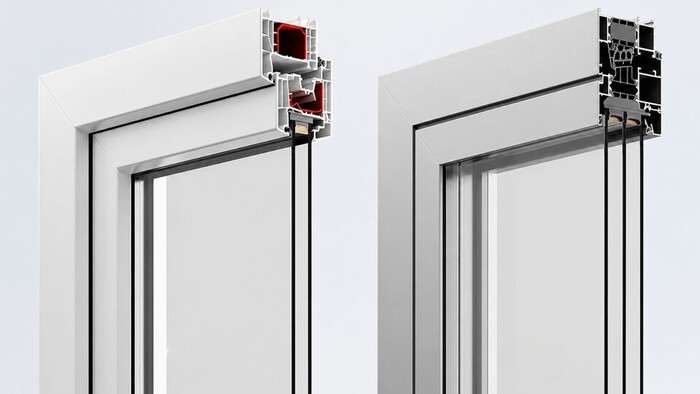
Aluminium Windows vs uPVC Windows: Quick Comparison
| Factor | Aluminium Windows | uPVC Windows |
|---|---|---|
| Strength | Excellent | Good |
| Frame Profile | Slim and sleek | Usually thicker |
| Thermal Insulation | Varies; better with thermal-break systems | Generally very good |
| Sound Insulation | Good with suitable glazing | Very good with proper sealing and glazing |
| Maintenance | Low | Very low |
| Corrosion Resistance | Good with quality finish | Excellent |
| Large Window Openings | Excellent | Depends on reinforcement and design |
| Design Appeal | Modern and premium | Clean and practical |
| Colour Choices | Wide range of finishes | Multiple options available |
| Weather Resistance | Very good with quality fabrication | Very good |
| Typical Suitability | Large, slim-profile modern windows | Energy-efficient, low-maintenance homes |
What Are Aluminium Windows?
Aluminium windows use aluminium profiles to form the frame and sash around the glass.
The material has an excellent strength-to-weight ratio, which allows manufacturers to create relatively slim frames capable of supporting large glass panels.
Modern aluminium windows are available in different styles, including:
- Sliding windows
- Casement windows
- Fixed windows
- Tilt-and-turn designs
- Large glass openings
- Combination window systems
Powder-coated and anodised finishes can also provide different colours and surface appearances.
This combination of strength and design flexibility is one reason aluminium is frequently used in contemporary architecture.
What Are uPVC Windows?
uPVC stands for unplasticised polyvinyl chloride. It is a rigid material commonly used for modern window and door frames.
Unlike traditional wooden windows, uPVC does not require regular painting or polishing.
The profiles generally contain multiple internal chambers, and larger windows may incorporate reinforcement depending on their dimensions and structural requirements.
uPVC windows are particularly valued for:
- Thermal insulation
- Airtight sealing
- Low maintenance
- Resistance to moisture
- Sound reduction with appropriate glazing
- Ease of cleaning
They are widely used in residential apartments and independent homes.
Aluminium vs uPVC: Which Is Stronger?
Aluminium generally has the advantage when structural strength is the priority.
Because aluminium is strong without requiring extremely bulky sections, manufacturers can create slimmer frames around relatively large areas of glass.
This makes aluminium particularly attractive for:
- Floor-to-ceiling windows
- Large sliding windows
- Wide balcony openings
- Modern villas
- High-rise buildings
- Commercial properties
uPVC can also produce strong and durable windows, particularly when correctly reinforced. However, very large openings require careful engineering because the frame dimensions, reinforcement and hardware must be suitable for the load.
For oversized windows, aluminium often offers greater design flexibility.
Which Provides Better Thermal Insulation?
For many Indian homeowners, thermal insulation is becoming increasingly important because windows influence air-conditioning requirements and indoor comfort.
uPVC is naturally a relatively poor conductor of heat compared with aluminium. Its multi-chambered profiles can therefore provide good thermal insulation.
Standard aluminium conducts heat more readily.
However, premium thermally broken aluminium systems use insulating material between the inner and outer aluminium sections to reduce heat transfer significantly.
Therefore, the comparison is not simply:
uPVC = insulated and aluminium = not insulated.
The actual performance depends on the entire window system.
Glass selection is equally important. Double glazing, Low-E glass and suitable solar-control glass can significantly influence heat gain through a window.
Which Is Better for Noise Reduction?
People living near busy roads, airports, railway lines, markets or construction zones often choose new windows primarily to reduce outside noise.
Both aluminium and uPVC windows can provide effective sound insulation when designed correctly.
Important factors include:
- Glass thickness and configuration
- Double or specialised acoustic glazing
- Quality of seals and gaskets
- Frame construction
- Installation quality
- Gaps around the window
uPVC systems are often associated with good airtightness, which can help reduce noise penetration.
But simply choosing uPVC will not automatically soundproof a room.
A poorly installed premium window can perform worse than a correctly installed system using another frame material.
Aluminium vs uPVC for Indian Weather
India has extremely varied climatic conditions.
A window suitable for dry conditions in Rajasthan may face completely different challenges in Mumbai, Chennai, Kerala, Delhi or Himalayan regions.
Aluminium
High-quality aluminium windows with suitable powder coating or anodising can provide excellent weather resistance.
For coastal locations, the quality of coating and hardware becomes especially important because salty air can accelerate corrosion of unsuitable metal components.
uPVC
uPVC does not rust and generally handles moisture well.
Quality profiles designed for strong sunlight and Indian climatic conditions are important because windows may face years of intense UV exposure and high temperatures.
For either material, product quality matters more than choosing solely by the material’s name.
Which Requires Less Maintenance?
Both options require much less maintenance than traditional wooden windows.
Aluminium Windows
Maintenance usually involves:
- Cleaning frames periodically
- Cleaning tracks
- Checking rollers and locks
- Inspecting seals
- Keeping drainage channels clear
Good aluminium finishes do not normally require frequent repainting.
uPVC Windows
uPVC is also very easy to maintain.
Regular cleaning with mild soap and water is usually sufficient for the frame. Hinges, rollers, handles and locking mechanisms should still be inspected periodically.
Neither window is completely maintenance-free because hardware and moving components can wear over time.
Which Looks More Premium?
This depends on the architectural style, but aluminium has a strong advantage where slim, minimal frames are desired.
Its strength allows relatively narrow profiles and larger visible glass areas.
Aluminium can work particularly well with:
- Contemporary architecture
- Minimalist interiors
- Large balconies
- Luxury apartments
- Commercial façades
- Dark modern finishes
uPVC frames tend to look more substantial because profiles can be thicker.
However, modern uPVC systems are available in different colours and wood-inspired finishes, making them suitable for many residential designs.
Durability and Expected Life
Both materials can provide long service life when the product is well manufactured and properly installed.
Aluminium does not rot or suffer termite damage. Quality surface finishes protect the material and maintain its appearance.
uPVC also resists termites, rust and moisture.
Actual window life depends heavily on:
- Profile quality
- Hardware
- Exposure to weather
- Installation
- Frequency of operation
- Maintenance
- Quality of gaskets and seals
Buying the cheapest available system simply because it is labelled aluminium or uPVC can result in disappointing performance.
Security: Which Window Is Safer?
Frame material is only one part of window security.
Aluminium’s structural strength can be beneficial, but a strong frame with weak locks still provides poor security.
Similarly, a properly reinforced uPVC system with quality multi-point locking can provide good protection.
Look for:
- Multi-point locking
- Strong handles
- Appropriate reinforcement
- Toughened or laminated glass where required
- Quality hinges and rollers
- Secure installation into the wall opening
Ground-floor and easily accessible windows deserve particular attention.
Aluminium vs uPVC Window Cost in India
Window pricing varies significantly across India, so comparing only a basic per-square-foot quotation can be misleading.
Final cost can depend on:
- Profile brand and series
- Window size
- Glass specification
- Single or double glazing
- Hardware quality
- Mesh requirement
- Opening mechanism
- Frame finish
- Reinforcement
- Installation complexity
Basic uPVC systems may be competitively priced, while premium aluminium systems—especially slim-profile or thermal-break designs—can cost considerably more.
Always compare quotations with matching specifications.
A low-priced aluminium window with basic glass should not be directly compared with a premium double-glazed uPVC system.
When Should You Choose Aluminium Windows?
Aluminium can be a better option when:
- You want slim, modern frames.
- Windows or balcony openings are large.
- Maximum glass area is important.
- Structural strength is a priority.
- Your home has contemporary architecture.
- You want premium colour and finish choices.
For high-end architectural applications and oversized openings, aluminium is often particularly attractive.
When Should You Choose uPVC Windows?
uPVC can be a practical choice when:
- Thermal insulation is a major priority.
- You want low-maintenance windows.
- You live in a humid environment.
- Airtightness is important.
- You want effective noise reduction with suitable glazing.
- You prefer a practical residential window system.
For bedrooms facing traffic-heavy roads, for example, a well-sealed uPVC system combined with appropriate acoustic glazing can be worth considering.
Don’t Ignore the Glass
Homeowners often spend too much time debating aluminium versus uPVC and not enough time selecting the glass.
Glass can represent most of the visible area of a modern window.
Depending on the requirement, options may include:
- Toughened glass
- Laminated glass
- Double-glazed units
- Low-E glass
- Solar-control glass
- Acoustic glass
If your biggest concern is summer heat, road noise or safety, the glazing specification can be just as important as the frame material.
Installation Quality Can Decide the Winner
Even an expensive window can fail if installed badly.
Incorrect installation can lead to:
- Water leakage
- Air gaps
- Poor sound insulation
- Difficult opening and closing
- Frame misalignment
- Rattling
- Premature hardware failure
Before choosing a supplier, evaluate the complete system—profile, glass, hardware, fabrication and installation.
That gives a much more realistic indication of window quality than the frame material alone.
FAQs
1. Which is better for Indian homes: aluminium or uPVC windows?
A. Both can work well. uPVC is particularly attractive for insulation, airtightness and low maintenance, while aluminium is excellent for slim profiles, structural strength and large openings. The better choice depends on your home’s design, climate, window size and budget.
2. Which window is better for reducing traffic noise?
A. Both can reduce noise when paired with suitable glazing and high-quality seals. For serious traffic noise, focus on the complete acoustic system—including glass configuration, airtightness, gaskets and installation—rather than choosing solely between aluminium and uPVC.
3. Are aluminium windows better for large balcony openings?
A. Aluminium is often preferred for large openings because its high strength allows relatively slim profiles while supporting larger glass panels. However, the exact system should still be engineered according to window dimensions, wind loads and glass weight.
4. Which lasts longer, aluminium or uPVC?
A. High-quality versions of both can last for many years. Aluminium offers excellent structural durability, while uPVC resists rust, moisture and termites. Actual service life depends heavily on profile quality, hardware, climate exposure, fabrication and installation rather than material alone.